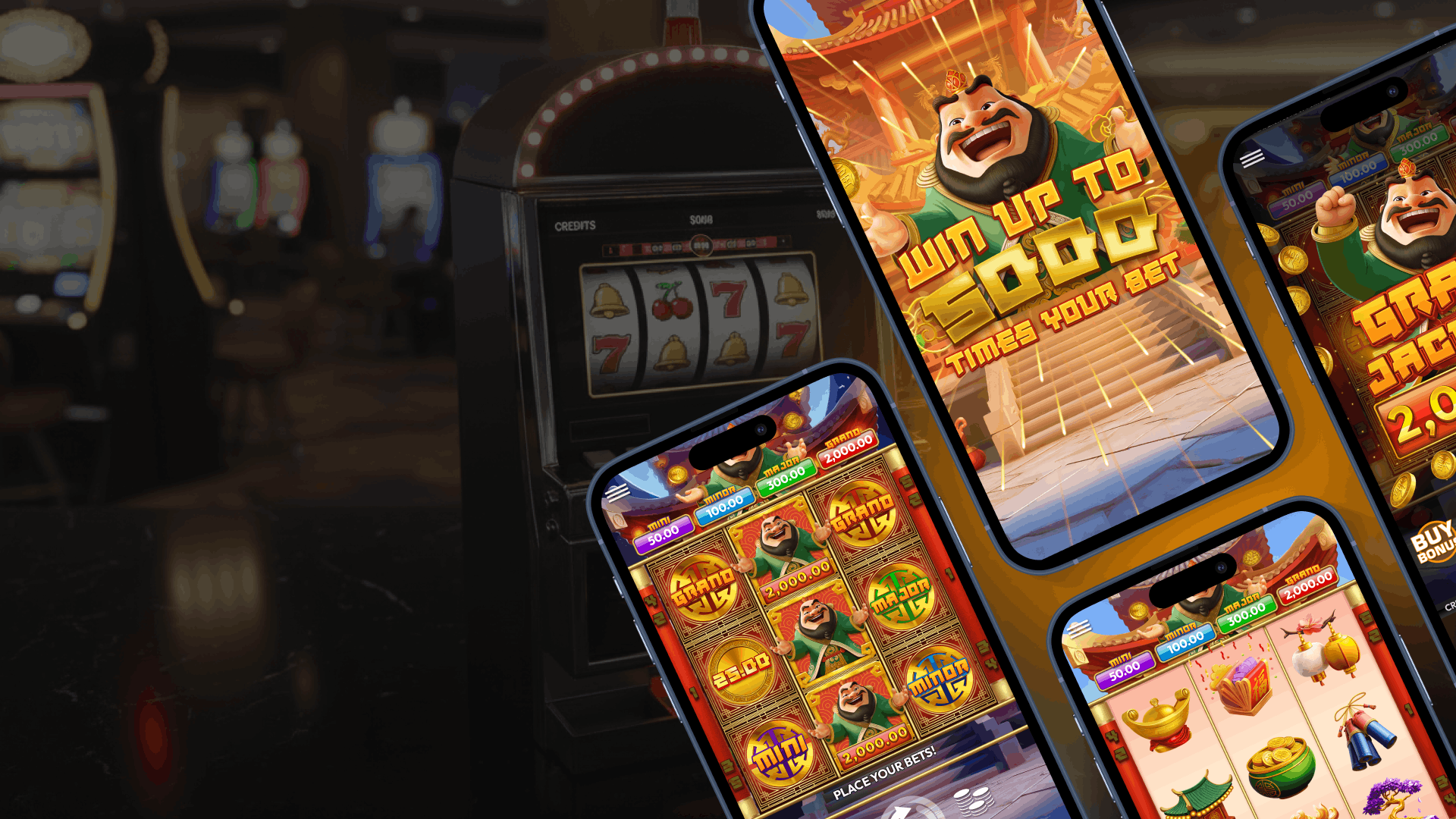

Slot machines have evolved dramatically over the past decades. What once began as mechanical devices with simple reels has transformed into sophisticated digital systems powered by complex infrastructure. Today, the future of slot machines is being shaped by technologies that influence how games are designed, delivered, and experienced.
In the early days of digital slots, gameplay followed predictable logic. A player initiated a spin, the result was generated, and the cycle repeated. Modern systems operate very differently. Each session is supported by analytics platforms, content delivery tools, and cross-platform engines that continuously refine the player experience.
The industry has also shifted toward personalization, data-driven production, and scalable architecture. Operators expect content to launch across multiple platforms simultaneously. Developers must ensure compliance across jurisdictions. Players expect engaging experiences that feel responsive and immersive.
These forces together are redefining how slot games are built. Artificial intelligence, open APIs, immersive graphics, and responsible gaming tools are moving from optional features to production standards. Understanding these technologies helps operators and developers prepare for what comes next.
Many studios today rely on structured workflows similar to those used in professional slot game development, where defined milestones and predictable pipelines help teams release games on schedule.
Why Uncertainty Has Become the Real Challenge in Slot Development
While new technologies often dominate industry headlines, one concern consistently appears in conversations between studios, operators, and development teams. It is not the lack of tools or ideas. It is uncertainty.
Recent industry discussions during ICE Barcelona 2026 confirmed a clear pattern. Companies are not looking for more inspiration. They are looking for fewer risks, clearer planning, and delivery models they can trust.
Uncertainty appears in many forms across slot production. Teams worry about missed deadlines, integration failures, unstable pipelines, or unclear responsibilities between vendors. Even small disruptions in early phases can cascade into delays during certification or launch.
This shift in mindset is reshaping how slot games are developed. Technology still plays a major role, yet structured processes are becoming equally important. Predictable workflows, stable teams, and transparent milestones are increasingly viewed as essential production assets.
In many ways, the future of slot machines is not defined only by visual innovation or mathematical models. It is defined by the ability to deliver reliable outcomes under real production pressure.
Studios that can reduce uncertainty gain a measurable advantage. They move faster through certification cycles, release content on schedule, and maintain long-term relationships built on trust.
AI in Slot Games
Artificial intelligence is becoming one of the most influential technologies in modern slot production. Unlike earlier automation tools, AI systems analyze large volumes of behavioral and operational data, allowing developers and operators to improve content delivery, personalization, and long-term engagement.
In regulated gaming environments, AI does not change core game probabilities or certified mathematical models. Instead, it supports surrounding systems that enhance the experience while maintaining fairness and compliance.
Personalized Gameplay Experiences
Modern slot ecosystems generate significant volumes of behavioral data. This includes session duration, preferred themes, interaction patterns, and device usage trends. AI systems analyze this data to recommend relevant content and improve how games are presented to players.
For example, recommendation engines can suggest games with similar visual styles, volatility profiles, or bonus mechanics. Interface elements can be optimized based on player interaction patterns, ensuring that menus, prompts, and features remain intuitive across different devices.
These personalization systems operate within fixed game mathematics. Certified RNG models and RTP values remain unchanged, while presentation layers adapt to improve accessibility and usability.
Over time, this creates smoother player journeys and more efficient content discovery. Operators benefit from improved retention metrics, while developers gain insights into how players interact with specific mechanics and themes.
AI-Driven Responsible Gaming
Responsible gaming has become a central priority across regulated markets. Artificial intelligence plays a growing role in identifying behavioral patterns that may indicate risk.
AI-based monitoring tools analyze session length, betting frequency, and deposit activity. When predefined risk indicators are detected, systems can trigger responsible gaming workflows such as reminders, optional limits, or cooling-off prompts.
These interventions are designed to support player wellbeing without disrupting normal gameplay. They also help operators comply with regulatory frameworks that require proactive monitoring and player protection systems.
In recent years, responsible gaming technologies have shifted from reactive reporting tools to proactive monitoring environments. This change allows operators to detect potential issues earlier and respond in a structured manner.
Adaptive Content and Engagement Systems
Another important application of AI lies in content optimization. Rather than altering gameplay outcomes, AI supports systems that determine when and how content is presented.
This includes identifying optimal moments to introduce promotions, recommend features, or highlight seasonal content. Timing and relevance often have a measurable impact on player engagement.
Predictive analytics also supports long-term content planning. Developers can identify which features generate the highest engagement across different regions, devices, and player segments.
At a production level, these insights influence future game design decisions. Studios can refine volatility models, feature frequency, and visual presentation strategies using aggregated performance data.
Predictive Analytics for Operators
Predictive analytics enables operators to make decisions based on historical and real-time data. Instead of reacting to declining engagement, systems can forecast when attention levels are likely to drop.
For example, operators may use predictive models to evaluate:
- Session frequency trends
- Engagement drop-off points
- Performance differences across game types
- Seasonal activity patterns
These insights allow content teams to optimize promotional strategies, update portfolios, and adjust release schedules.
From a development perspective, predictive analytics shortens feedback loops. Instead of waiting months to evaluate performance, studios can iterate based on measurable outcomes.
This data-driven approach is quickly becoming a baseline expectation across competitive markets.
Data Access and Open Interfaces
One of the most important structural changes shaping the future of slot machines is the shift toward open architecture. In earlier development cycles, slot content was often built inside isolated environments. Integration with new platforms required significant rework, additional testing cycles, and extended timelines.
Today, modern slot production relies heavily on open APIs and standardized integration frameworks. These tools allow developers to connect games to multiple platforms without rebuilding core functionality. As a result, content distribution becomes faster, more predictable, and easier to scale across regions.
Open interfaces also improve visibility into performance data. Operators gain access to detailed metrics related to gameplay activity, engagement patterns, and session behavior. This transparency helps teams evaluate which content resonates with players and which mechanics require refinement.
Another advantage of open architecture lies in cross-platform compatibility. Modern slot games are expected to function consistently across mobile devices, desktop environments, and increasingly, hybrid gaming terminals. Unified APIs ensure that a single game build can support multiple platforms without compromising performance or compliance.
From a production perspective, open systems reduce technical risk. Integration pipelines become more standardized, reducing unexpected delays during certification or platform onboarding. For operators expanding into new jurisdictions, this flexibility is essential for maintaining release schedules.
The future of slot machines depends heavily on this type of modular infrastructure. Games are no longer isolated products. They are connected systems that rely on continuous communication between content engines, analytics tools, and platform services.
From Vendors to Long-Term Production Partners
Another shift shaping the future of slot development is the changing relationship between studios and external teams.
In earlier production cycles, outsourcing was often treated as a transactional activity. Teams hired vendors to deliver isolated components such as art assets, integrations, or specific mechanics. Once the task was completed, collaboration ended.
Today, this model is evolving. Studios increasingly look for long-term production partners rather than short-term vendors.
This change reflects the growing complexity of slot ecosystems. Modern releases involve interconnected systems that must remain stable across multiple platforms and jurisdictions. Fragmented workflows introduce risks that are difficult to control once production accelerates.
Industry discussions at ICE Barcelona 2026 highlighted this transition clearly. Teams expressed a strong preference for partners who could assume ownership of complete production stages, communicate proactively, and remain accountable throughout the lifecycle of the game.
Long-term collaboration models create several practical advantages. Teams gain continuity across development phases. Communication flows improve because responsibilities remain consistent. Risk management becomes easier when fewer external dependencies exist.
For operators and studios managing growing portfolios, this shift toward partnership-driven production is becoming a defining strategy.
The future of slot machines will depend not only on technology stacks, but also on how effectively teams coordinate across the entire development lifecycle.
Gamification and Engagement Features
Gamification has become one of the defining elements of modern slot experiences. While traditional slots focused primarily on spin outcomes, newer designs emphasize progression, interaction, and long-term engagement.
Players increasingly respond to systems that provide a sense of advancement. Instead of isolated sessions, many games now encourage continued participation through structured reward loops and evolving content layers.
Common gamification elements include:
- Mission-based progression systems
- Achievement milestones
- Unlockable bonus content
- Seasonal events and tournaments
- Persistent reward mechanics
These features extend gameplay beyond individual spins. They create environments where players return to complete objectives, explore new features, and interact with evolving game elements.
Industry trends discussed during the ICE Barcelona 2026 exhibition highlighted a strong demand for progression-driven mechanics. Developers and operators increasingly focus on session depth rather than simple repetition cycles. This shift reflects broader changes in player expectations, particularly among audiences familiar with mobile and console gaming ecosystems.
A practical example of structured engagement design can be seen in the development of Bank Wagon Heist. In this project, narrative-driven gameplay elements were combined with layered bonus systems and interactive progression mechanics. The goal was to increase session engagement while maintaining mathematical clarity and predictable performance across devices.
The implementation of mission-style features allowed players to experience a sense of continuity across sessions. Rather than relying solely on short-term excitement, the design encouraged exploration of different game layers. This approach supported stronger retention metrics and improved overall engagement depth.
Gamification continues to evolve as developers refine how reward structures interact with player motivation. The future of slot machines will likely depend on how well studios balance entertainment value with structured progression models.
Visual and Immersive Technologies
Visual quality has become a major differentiator in slot development. Early digital slots relied on simple animations and limited graphical effects. Modern production pipelines, however, increasingly resemble those used in high-end video game development.
High-resolution artwork, cinematic animation sequences, and responsive visual effects are now expected as baseline production standards. These improvements influence both player perception and long-term engagement.
One major shift involves the adoption of advanced animation frameworks. These systems allow developers to create fluid transitions between gameplay states. Bonus rounds, symbol interactions, and reward sequences now function as dynamic visual experiences rather than static events.
Immersive technologies are also expanding the boundaries of how slot environments are presented. Virtual reality and augmented reality remain emerging tools within regulated markets, yet early experimentation shows strong potential for specific use cases.
Virtual reality environments allow players to interact with fully rendered casino spaces. Instead of viewing reels on a flat interface, users can navigate digital environments that simulate physical presence. While widespread adoption remains limited, the technology continues to evolve alongside improvements in hardware accessibility.
Augmented reality introduces a different type of interaction. Digital elements can be layered onto physical environments, creating hybrid gameplay experiences that blend virtual content with real-world surroundings. These tools are still developing, yet they demonstrate how visual technologies may reshape long-term engagement strategies.
Even without immersive hardware, visual systems continue to advance. Modern slot pipelines increasingly support:
- High-definition rendering across device types
- Real-time animation systems
- Adaptive layouts for responsive design
- Haptic feedback integration on mobile platforms
These improvements create experiences that feel dynamic and polished across multiple devices. For operators, visual quality plays a measurable role in player acquisition and retention.
The future of slot machines will likely depend on how effectively studios integrate visual storytelling with functional gameplay mechanics. Visual design alone does not drive engagement. However, when combined with strong mathematical structure and responsive interfaces, it becomes a powerful tool for long-term retention.
Teams that manage high release volumes often depend on standardized asset libraries and review workflows similar to those used in dedicated slot game art production, where consistency across themes improves delivery speed and reduces revision cycles.
Responsible and Fair Gaming
As slot technologies become more advanced, expectations around transparency and fairness continue to grow. Players, regulators, and operators all require systems that maintain trust while supporting long-term sustainability.
At the core of every regulated slot game lies the Random Number Generator, or RNG. These systems determine outcomes independently of player behavior and must remain consistent across all sessions. Certified mathematical models ensure that each game delivers results according to predefined probabilities that are verified during licensing.
Artificial intelligence contributes to fairness in indirect ways. Rather than influencing game outcomes, AI systems support monitoring environments that identify irregular patterns or operational anomalies. This includes detecting unusual gameplay activity, reviewing session trends, and flagging events that may require additional validation.
Responsible gaming systems have also become more sophisticated in recent years. Instead of relying solely on manual reporting, operators now use automated monitoring tools that evaluate behavioral patterns in real time. These systems help identify extended sessions, repeated deposit activity, or sudden changes in betting frequency.
When predefined thresholds are reached, players may receive prompts encouraging healthy gameplay habits. These can include reminders about time spent in the session, optional deposit limits, or temporary cooling-off periods. Such mechanisms support compliance with responsible gaming policies across regulated markets.
Emerging technologies such as distributed ledgers are also being explored in limited contexts. In certain environments, blockchain-based systems are tested to improve auditability and transaction transparency. While these implementations remain niche, they demonstrate how future compliance frameworks may incorporate additional verification layers.
Regular third-party audits remain a central component of trust. Independent laboratories verify that game logic, payout structures, and RNG outputs align with certified values. These evaluations ensure that published RTP levels remain accurate across production environments.
As the industry grows, responsible gaming infrastructure will continue to evolve alongside gameplay innovation. Sustainable development depends on balancing entertainment value with strong oversight systems.
Regulation and Compliance
Regulation plays a defining role in shaping the future of slot machines. As new technologies enter the market, regulatory bodies continuously adapt their frameworks to ensure safety, fairness, and financial transparency.
Modern slot development must account for multiple compliance layers from the earliest design stages. These requirements affect everything from mathematical modeling to data handling and user authentication systems.
Several core compliance domains influence slot production pipelines:
- Geolocation verification ensures that gameplay occurs only within permitted jurisdictions
- Know Your Customer procedures support identity validation and fraud prevention
- Anti-Money Laundering systems detect suspicious financial patterns
- RTP standards define acceptable payout ranges
- Data protection laws regulate how player information is stored and processed
These systems operate in parallel with gameplay infrastructure. Developers must integrate compliance tools without introducing performance bottlenecks or usability challenges.
For operators entering new markets, regulatory readiness directly affects launch timelines. Games that are designed with jurisdictional flexibility can be adapted more efficiently across regions. This reduces certification delays and supports faster market entry.
Compliance-driven architecture has also become a competitive advantage. Studios that build regulatory features into their core frameworks gain flexibility when expanding into additional territories.
The future of slot machines will continue to depend on how effectively developers integrate innovation within structured regulatory environments. Successful studios are those that design systems capable of evolving alongside policy changes.
Planning Drives Delivery Speed
Speed in slot development is often associated with tools, automation, or team size. In practice, the strongest driver of delivery timelines is planning discipline.
Production teams increasingly recognize that early-stage clarity determines the success of later phases. When milestones are clearly defined and dependencies are mapped in advance, development moves with fewer interruptions. Certification steps become easier to manage, and integration risks are reduced before they grow into costly delays.
Discussions across the industry have reinforced the same pattern. Projects that invest time in structured planning tend to move faster overall, even if the initial preparation phase appears longer. Teams gain confidence because expectations are visible and responsibilities are clearly assigned.
This principle becomes especially important in multi-platform environments where releases must align across different technical and regulatory conditions. In these scenarios, planning functions as a stabilizing force that keeps production predictable under pressure.
The future of slot machines will depend not only on advanced tools, but on disciplined execution frameworks that support consistent delivery cycles.
Key Technology Trends Shaping the Future of Slot Machines
While individual technologies often receive attention, the most significant changes occur when multiple systems evolve together. The future of slot machines is shaped by a combination of technical, creative, and operational advancements working in parallel.
Artificial intelligence continues to influence analytics, personalization, and operational monitoring. Data-driven design workflows allow teams to refine mechanics based on measurable player behavior rather than assumptions.
Gamification systems are becoming more structured, introducing persistent progression models that encourage long-term engagement. These systems are increasingly aligned with broader trends seen in video game development, where retention depends on layered experiences rather than isolated sessions.
Cross-platform architecture remains another major trend. Modern slot titles must function reliably across mobile devices, desktop platforms, and hybrid gaming environments. Unified codebases and standardized integration tools support this requirement.
Visual production pipelines are also evolving rapidly. Real-time animation tools and scalable asset frameworks allow developers to create cinematic-quality experiences without extending production timelines beyond practical limits.
Industry discussions at events such as ICE Barcelona 2026 have reinforced the importance of modular development pipelines. Studios are increasingly moving toward structured production frameworks that reduce technical risk and improve delivery predictability.
Taken together, these trends highlight a broader transformation. Slot development is shifting from isolated production cycles to interconnected ecosystems that rely on data, automation, and scalable infrastructure.
Preparing for the Future of Slot Development
Adopting new technologies alone does not guarantee long-term success. The true challenge lies in integrating systems in a way that supports predictable delivery, regulatory readiness, and sustained player engagement.
Modern slot production requires coordination between multiple disciplines. Art teams, mathematicians, developers, and compliance specialists must work within shared workflows that support continuous iteration.
The same production principles apply across the broader field of casino game development, where teams must balance compliance requirements, technical stability, and delivery timelines.
Studios that rely on fragmented pipelines often encounter delays during integration or certification. In contrast, structured production models allow teams to manage complexity without sacrificing flexibility.
At Twin Win Games, development pipelines are built around modular workflows designed to support full-cycle production. From early concept design to certified launch, each phase is aligned with technical standards that support scalability and regulatory readiness.
As market expectations continue to rise, the ability to deliver stable, engaging content on predictable timelines becomes a defining competitive factor.
The Rise of Hybrid Game Ecosystems
One of the most significant long-term shifts in slot development involves the transition from individual products to interconnected systems.
In earlier production models, each slot title functioned as a standalone release. Development cycles focused on delivering one game at a time, often without long-term integration strategies. Performance data remained isolated, and feature reuse required additional engineering effort.
Today, hybrid ecosystems are changing this logic.
Modern slot platforms increasingly connect multiple systems into unified environments. Shared analytics, reusable mechanics, and cross-platform compatibility allow successful concepts to evolve beyond a single release.
This hybrid model extends the lifecycle of strong mechanics and improves production efficiency. Features developed for one title can be adapted across multiple games without rebuilding them from scratch.
This type of reuse typically depends on a modular casino game engine, where shared components allow your team to adapt mechanics across titles without restarting development from zero.
Industry insights presented during ICE Barcelona 2026 emphasized that future-ready studios are already designing mechanics that can travel across ecosystems rather than exist in isolation.
This shift also affects how studios think about product architecture. Instead of building isolated experiences, teams now design scalable frameworks that support long-term portfolio growth.
The future of slot machines is moving toward connected product ecosystems where each release contributes to a broader development strategy.
In the Final Analysis
The future of slot machines is being shaped by a convergence of technologies that extend far beyond traditional gameplay mechanics. Artificial intelligence supports smarter analytics. Gamification introduces structured engagement models. Visual technologies enhance immersion and storytelling. Compliance systems ensure transparency and operational stability.
For players, these developments create richer and more responsive gaming environments. For operators, they introduce new opportunities to optimize performance and expand into additional markets. For developers, they redefine production standards and technical expectations.
Many of these changes are already visible in modern slot pipelines. Data-driven development, modular architecture, and cross-platform compatibility have become essential components of competitive production strategies.
Looking ahead, continued innovation will depend on balancing creativity with technical discipline. Systems must evolve without compromising fairness, security, or regulatory alignment.
The future of slot machines is not defined by a single breakthrough technology. It is shaped by how effectively studios integrate multiple innovations into stable, scalable development ecosystems.
FAQ
How is artificial intelligence influencing modern slot development?
Artificial intelligence supports analytics, personalization, and operational monitoring within slot ecosystems. It helps operators analyze gameplay patterns, optimize content recommendations, and improve player engagement workflows. AI operates outside certified mathematical models, ensuring that core game probabilities remain unchanged.
How do modern slot games support responsible gaming?
Modern slot platforms use monitoring tools that evaluate gameplay behavior in real time. These systems detect extended sessions, unusual deposit activity, or sudden changes in interaction patterns. When thresholds are reached, players may receive reminders or options to set voluntary limits. This approach helps operators comply with responsible gaming standards across regulated markets.
How can operators prepare for the future of slot technology?
Preparation typically involves investing in scalable infrastructure and modular development pipelines. Operators benefit from platforms that support multi-jurisdiction compliance, cross-platform deployment, and real-time analytics. Building partnerships with experienced development teams also helps reduce technical risk during expansion.
What technologies will define the next generation of slot machines?
Several technologies are expected to remain influential. These include artificial intelligence for analytics, gamification systems for engagement, modular game engines for scalability, and advanced visual pipelines for immersive gameplay. Regulatory technology and compliance automation will also play a critical role in maintaining operational stability.