
Online fish table games have rapidly become one of the most profitable segments within the global iGaming industry. Combining multiplayer interaction, skill-based perception, and arcade-style gameplay, fish shooting games offer significantly higher engagement than traditional slots.
For operators, studios, and entrepreneurs, this creates a powerful opportunity to launch a high-retention, high-revenue gaming product.
This guide covers everything you need to know about fish table game development, including market trends, monetization models, technology, costs, and how to launch successfully.
What Is a Fish Table Game?
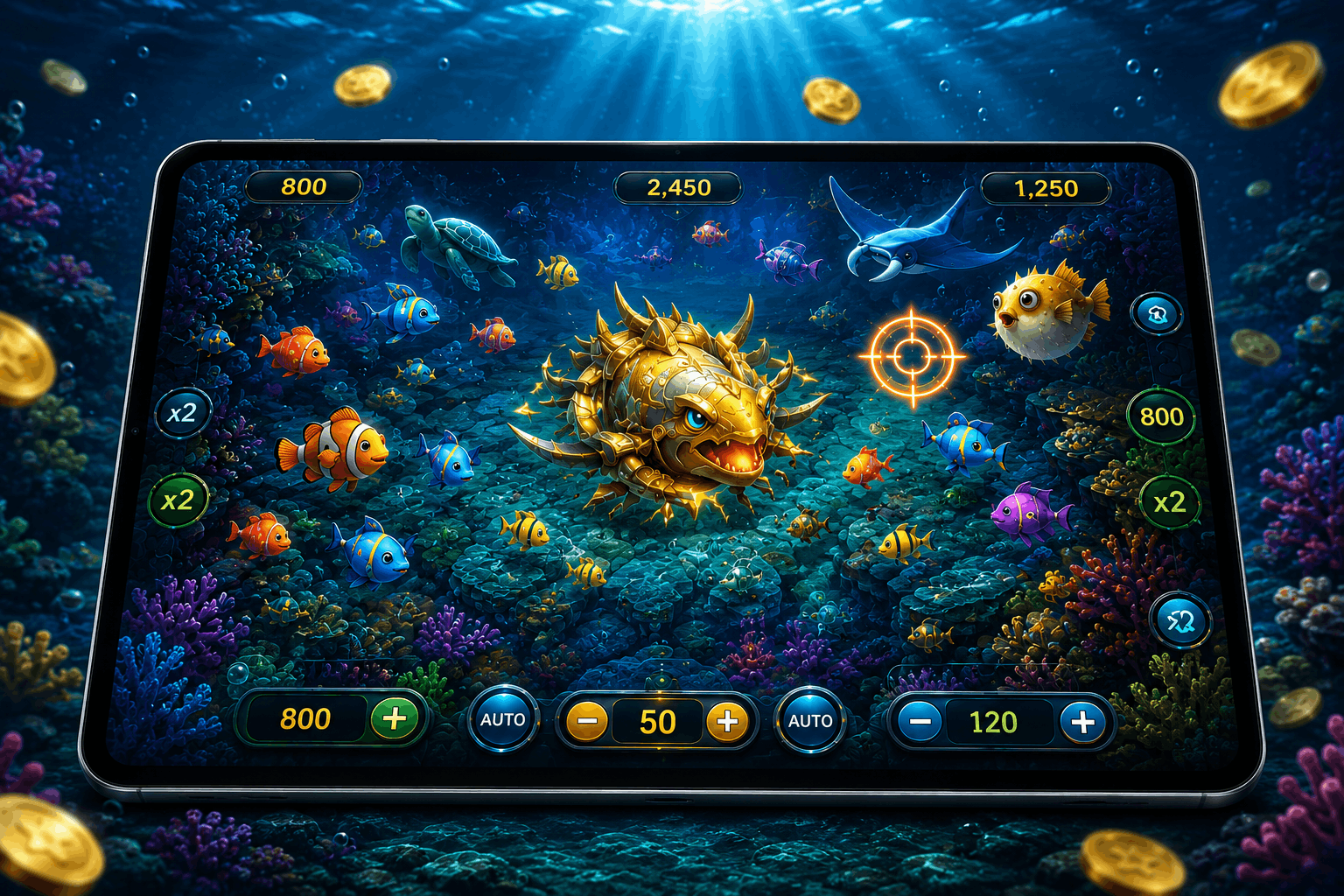
A fish table game (also known as a fish shooting game or fish arcade game) is a multiplayer casino-style game where players use virtual cannons to shoot at fish swimming across the screen. Each fish carries a point or credit value, and players spend credits (bullets) to fire at targets. The bigger or rarer the fish, the higher the payout.
Originally popular in Asian arcade halls, fish table games migrated online and gained significant traction in North American and Southeast Asian markets.
Key characteristics include:
- Multiplayer format, typically 4 to 8 players sharing the same screen
- Skill perception, where players feel their aim and strategy affect outcomes
- Varied payout tiers from small fish worth a few credits to boss characters worth hundreds
- Bonus mechanics including chain kills, special weapons, timed events, and jackpots
Unlike traditional slots, fish table games create a social gaming atmosphere. That shared experience drives session length and return visits, two metrics operators care deeply about.
Fish Table Game Market Trends
The fish table segment is growing alongside the broader online gambling market. Global iGaming revenue is expected to surpass $100 billion by 2026. Asia-Pacific dominates fish game demand due to arcade culture influence, while mobile accounts for 60 to 70 percent of total gameplay. Multiplayer games show 2 to 3x higher retention compared to slots.
Fish table games are growing because they appeal to non-traditional casino players, perform strongly in Southeast Asia and North America, blend arcade and gambling mechanics, and offer high replayability and social interaction.
Fish Table Games vs Slot Games
| Metric | Fish Table Games | Slot Games |
| Engagement | High | Medium |
| Session Time | 20 to 45 min | 5 to 10 min |
| Monetization | Multi-layer | Linear |
| Multiplayer | Yes | No |
| Skill Perception | Strong | None |
This difference is why many operators are expanding beyond slots into fish shooting games.
Most Popular Fish Table Game Types
Classic Fish Table Games replicate the original arcade format with a top-down ocean view, multiple players firing simultaneously, and a straightforward credit system. These work well for players new to the genre and for markets where simplicity drives adoption.
Boss Rush Fish Games introduce high-value boss characters that appear periodically. Massive sea creatures require coordinated fire from multiple players to defeat, spiking engagement and creating natural social moments.
Progressive Jackpot Fish Games tie a growing jackpot to a rare catch or special event trigger. This adds a lottery-style excitement layer that broadens the player base beyond pure arcade fans.
Tournament Fish Games put players in head-to-head or bracket competitions over a fixed period. The competitive format suits markets with strong esports or gaming cultures.
Themed Fish Games in mythology, fantasy, holiday, or region-specific styles allow operators to localize content and run seasonal campaigns without rebuilding core mechanics.
Monetization Models in Fish Table Games
Core revenue streams include the credit-per-shot model, weapon upgrades and power-ups, progressive jackpots, VIP tables and high-stakes rooms, and event-based monetization through boss raids and tournaments. Compared to slots, fish games generate higher revenue per session due to multi-layer monetization.
Key Features of Fish Table Game Development
Real-Time Multiplayer Engine is the technical foundation. Fish table games require low-latency synchronization across all connected players. Every shot, every fish kill, and every credit change must update simultaneously for all participants.
Smooth Physics and Hit Detection define the feel of the game. Players need to see their shots connect or miss with satisfying visual and audio feedback. Imprecise collision detection breaks the skill perception that makes fish games compelling.
Weapon and Upgrade Systems extend session length. Players should be able to purchase stronger cannons, special ammunition such as freezing weapons and laser beams, and limited-time power-ups.
Responsive UI Across Devices is mandatory. Your fish table game must perform on desktop browsers, mobile devices, and touchscreen kiosks. HTML5 and WebGL-based development supports all of these targets from a single codebase.
Flexible RTP and Payout Configuration allows operators to tune fish values, spawn rates, and bonus trigger frequencies by market or player segment.
Admin Dashboard and Management Tools let operators monitor sessions, adjust game parameters, manage bonuses, and review financial reporting without needing developer support for every change.
If your fish table concept requires unique mechanics, a specific visual style, or platform requirements outside standard formats, our custom game development service covers the full scope from concept through delivery.
Key Benefits of Creating a Fish Table Game
High Player Engagement
Fish table games generate significantly longer average session times than traditional slots. Session lengths of 20 to 45 minutes are common, compared to 5 to 10 minutes for casual slots. Longer sessions mean more revenue per visit and stronger return rates.
Revenue Potential
The multiplayer format means multiple players contribute credits simultaneously to the same game instance. Combined with upgrade purchases, boss events, and jackpot contributions, the revenue per active game table is substantially higher than single-player alternatives.
Wide Audience Appeal
Fish table games attract players who actively avoid traditional casino products. Younger demographics, casual gamers, and players from cultures with strong arcade traditions all find the format accessible and engaging.
Customization Opportunities
Unlike licensed slot content, a custom fish table game can be branded, themed, and mechanically tailored to your specific market. Seasonal events, regional themes, and exclusive characters can all be implemented without licensing restrictions.
Cross-Platform Compatibility
A well-architected fish table game runs across web browsers, iOS, Android, and physical kiosk hardware. That single-codebase, multi-deployment model reduces ongoing maintenance costs while maximizing market reach.
How To Start an Online Fish Table Business
Analyze the Fish Table Game Market
Begin with market research that answers four questions: Who are your target players? What platforms do they use? What competition already exists in your target geography? What regulatory framework governs real-money gaming in that market?
Study the regulatory environment early. Some markets have specific technical and compliance requirements that must be built into the game from day one. Retrofitting compliance is expensive; building for it from the start is efficient.
Establish Your Business Model
Direct operator model: You own the platform and games, acquire players directly, and retain all margin. This requires the highest upfront investment but delivers maximum long-term return.
White-label model: You operate a branded platform built on a technology provider’s infrastructure. Lower barrier to entry, faster launch, but reduced margin and limited differentiation.
Venue/distributor model: You supply fish table software to physical venues rather than running an online platform yourself.
Aggregator model: You develop fish table content and distribute it through existing casino aggregation platforms, reaching their existing operator networks.
Choose a Trusted Fish Table Game Developer
Evaluate potential developers on five criteria: full-cycle capability, math and compliance expertise, multiplayer architecture experience, production track record, and post-launch support model.
At Twin Win Games, we have delivered 1,000+ casino game projects for clients including Aristocrat, Relax Gaming, and William Hill. Our full-cycle model covers math, art, engineering, backend, QA, and certification support all in-house. Our average delivery timeline is 3 to 6 months, compared to the 8 to 12 month industry standard.
Fish table games are one format within our broader casino game development offering, which covers slots, table games, crash games, bingo, keno, poker, domino and more.
Set Up Casino Management Systems
Your fish table game needs a backend ecosystem to operate commercially, including a Remote Game Server (RGS), wallet and payment integration, a bonus engine, a player management system, and analytics and reporting tools.
Launch and Promote the Game
Soft launch with a limited audience before full release. Use SEO and content marketing to build organic player acquisition. Affiliate and partnership programs leverage existing player communities. Platform integration with aggregators immediately distributes your game to hundreds of licensed operators.
Maintain and Update Regularly
Post-launch your roadmap should include seasonal themes and limited-time events, new boss characters and special weapons, balance adjustments based on player behavior data, and new game modes. Games that launch without a content roadmap lose players to competitors within months.
Obstacles in Creating Online Fish Table Games
Real-Time Game Performance
The technical challenge most developers underestimate is maintaining consistent, low-latency synchronization for 4 to 8 simultaneous players across variable network conditions. Poor multiplayer architecture produces desync states where players see different game states, creating perceived cheating and rapid player attrition.
Equity and Fair Play
Players in fish table games are especially sensitive to fairness because the skill-perception element makes unfair outcomes feel like cheating rather than bad luck. This requires certified RNG systems, carefully designed payout math, and ongoing monitoring of actual versus expected payout distributions.
Infrastructure Capacity and Growth
A successful launch creates sudden traffic spikes that can overwhelm undersized infrastructure. Your backend must be architected for horizontal scaling from the start.
Legal and Policy Adherence
Real-money fish table games operate under gambling law in most jurisdictions. Non-compliance creates business-ending risk including platform shutdowns, financial penalties, and reputational damage.
Player Engagement and Content Updates
The single most common reason fish table game businesses plateau after launch is content stagnation. Sustainable fish table businesses operate on a structured content calendar with regular new characters, event mechanics, seasonal themes, and feature updates.
The Cost of Developing a Fish Table Game
Basic fish table game (single theme, 4-player, standard weapons, web platform): $50,000 to $120,000
Mid-tier fish table game (custom theme, 6 to 8 players, progression system, mobile and web, admin dashboard): $120,000 to $300,000
Premium fish table game (multiple themes, tournament mode, progressive jackpot, full platform integration, multi-market compliance): $300,000 to $600,000+
These ranges assume a full-service development partner. Attempting to build with a fragmented vendor stack typically costs 20 to 40 percent more due to coordination overhead and integration failures.
Standard industry delivery runs 8 to 12 months. Studios with pre-built engine infrastructure and AI-assisted art production pipelines can compress this to 3 to 6 months.
Future Trends and Innovations in Fish Table Games
AI and Personalization
AI-driven personalization is entering fish table design through adaptive difficulty systems, personalized fish spawn patterns, and AI-powered bonus targeting based on behavioral data.
Blockchain Integration
Blockchain-based fish table games enable provably fair RNG verification, cryptocurrency payment rails, and player-owned digital assets. Operators in permissive jurisdictions are already capturing early adopter audiences with this model.
VR/AR Gaming Experiences
Immersive fish table experiences are technically feasible and in early development at several studios. The player hardware adoption curve means this remains a niche segment today but is worth monitoring for operators positioning for premium differentiated experiences.
Key Takeaways
Starting an online fish table game business requires navigating interconnected decisions across market analysis, business model design, product development, regulatory compliance, and ongoing operations. The fish table segment rewards operators willing to invest in quality: technically robust multiplayer infrastructure, carefully designed math models, polished art and animation, and a content roadmap that keeps the experience fresh.
If you’re planning to launch an online fish table game or expand an existing portfolio with fish table content, Twin Win Games offers full-cycle development with proven delivery in 3 to 6 months. Our team of 110+ specialists has shipped 1,000+ casino game projects for operators and studios worldwide.
Contact us to discuss your project and get a production timeline estimate.
FAQ
How do you select a reliable fish table game developer?
Look for a development partner with verifiable delivery history, in-house math and compliance expertise, demonstrated multiplayer architecture experience, and a clearly defined post-launch support model. Studios that manage concept, engineering, art, and certification under one roof consistently outperform fragmented vendor stacks on both quality and timeline.
How long does it take to develop a fish table game?
With a well-resourced full-cycle studio, a complete fish table game from concept to launch typically takes 3 to 6 months. Studios without pre-built engine infrastructure may take 8 to 12 months for equivalent scope.
What licenses are required to operate an online fish table game?
Most regulated markets require a gambling operator license, a certified RNG implementation validated by an approved testing lab such as GLI, iTech Labs, or BMM Testlabs, and technical compliance documentation. Key markets include UKGC, MGA, AGCO Ontario, and various US state gaming commissions.
What is the minimum budget to launch a fish table game?
A functional single-theme fish table game targeting a single platform can be developed from approximately $50,000 to $120,000. Operators launching in multiple regulated markets with progressive jackpots and full platform integration should plan for $300,000+ in total first-year investment.
Can fish table games be adapted for mobile?
Yes. Modern fish table games built on HTML5/WebGL frameworks run natively on iOS and Android browsers without requiring app store submissions. Ensure your development brief explicitly specifies mobile-first design if mobile is a priority market.
👉 Contact us.