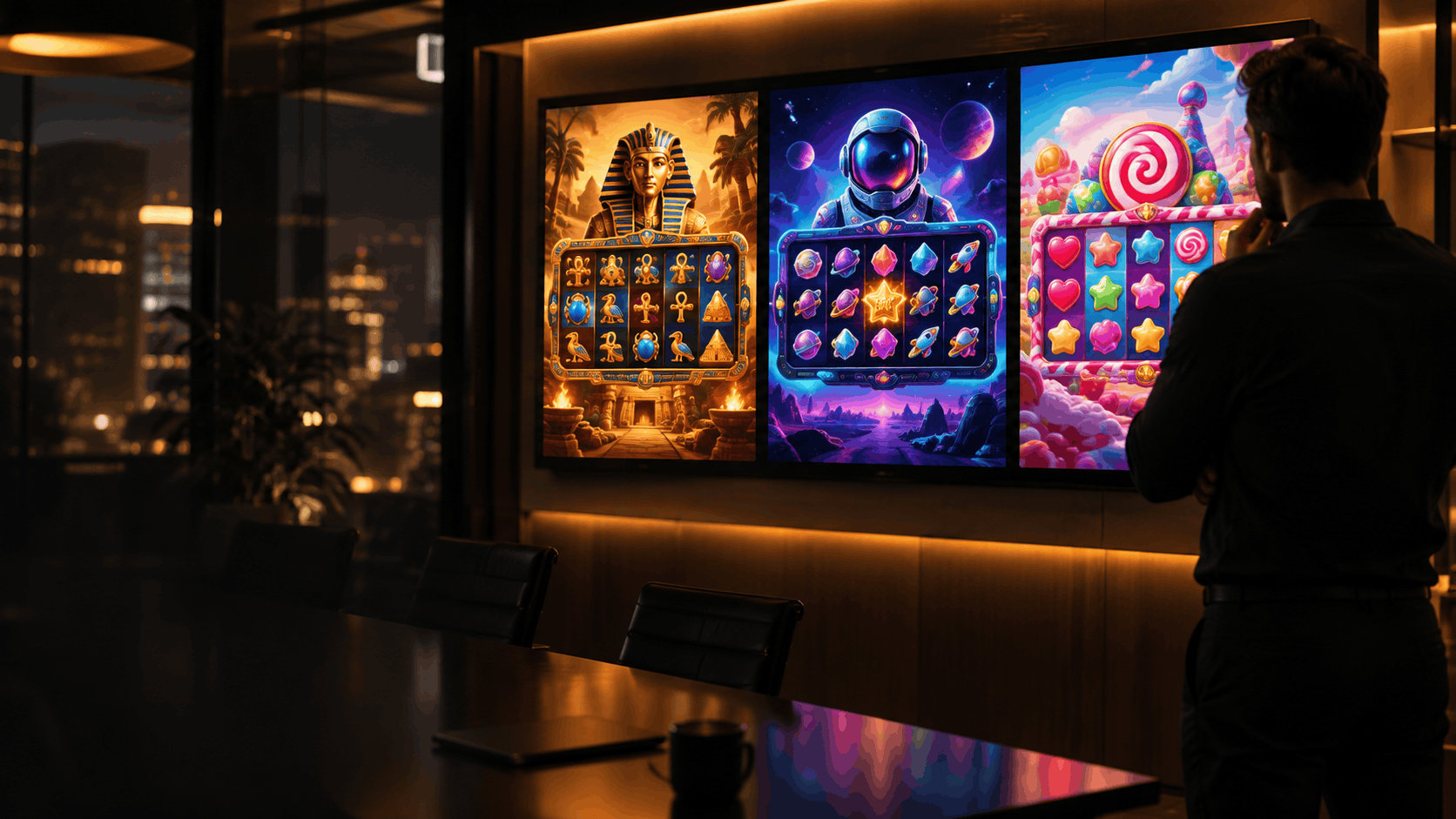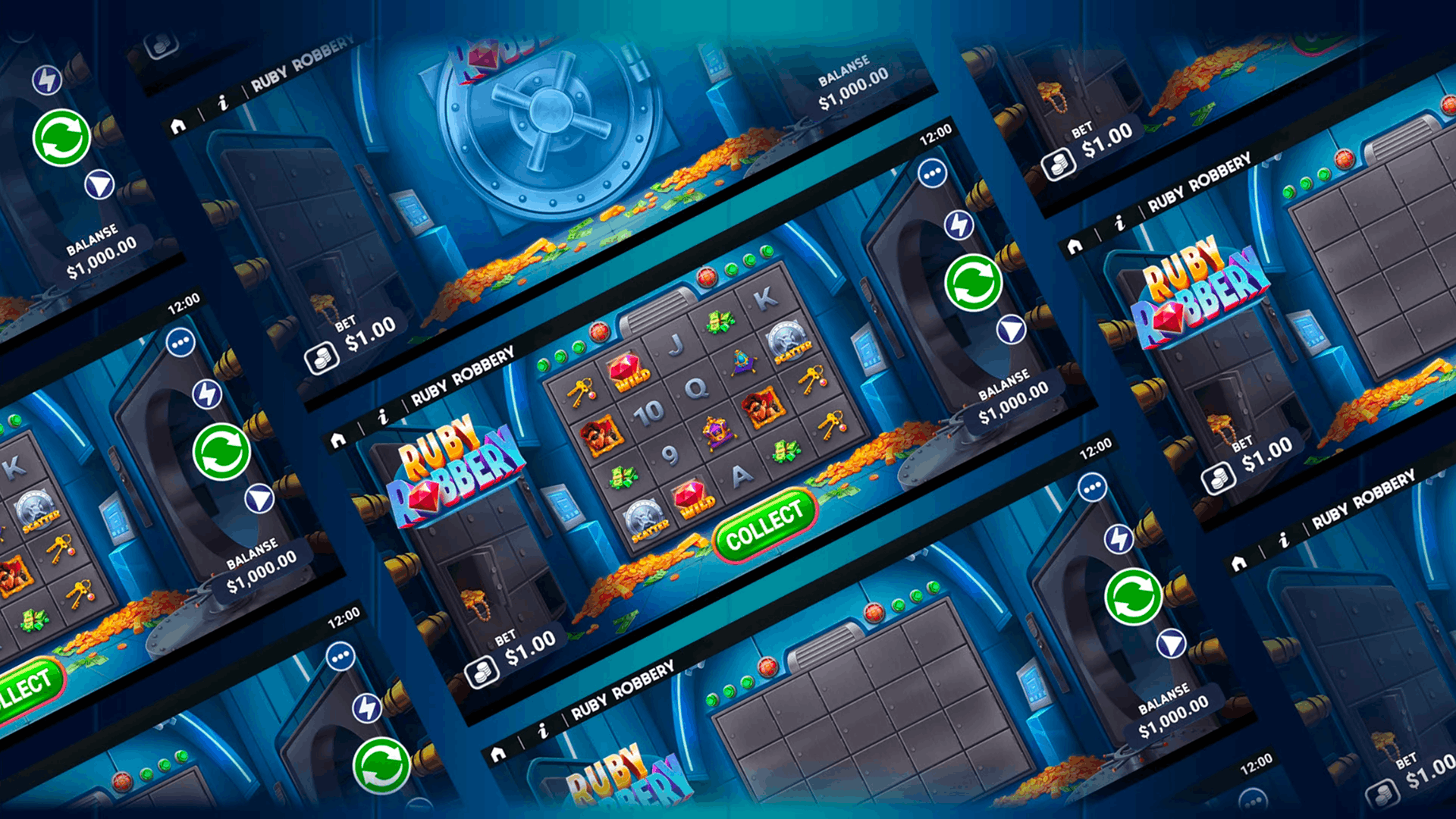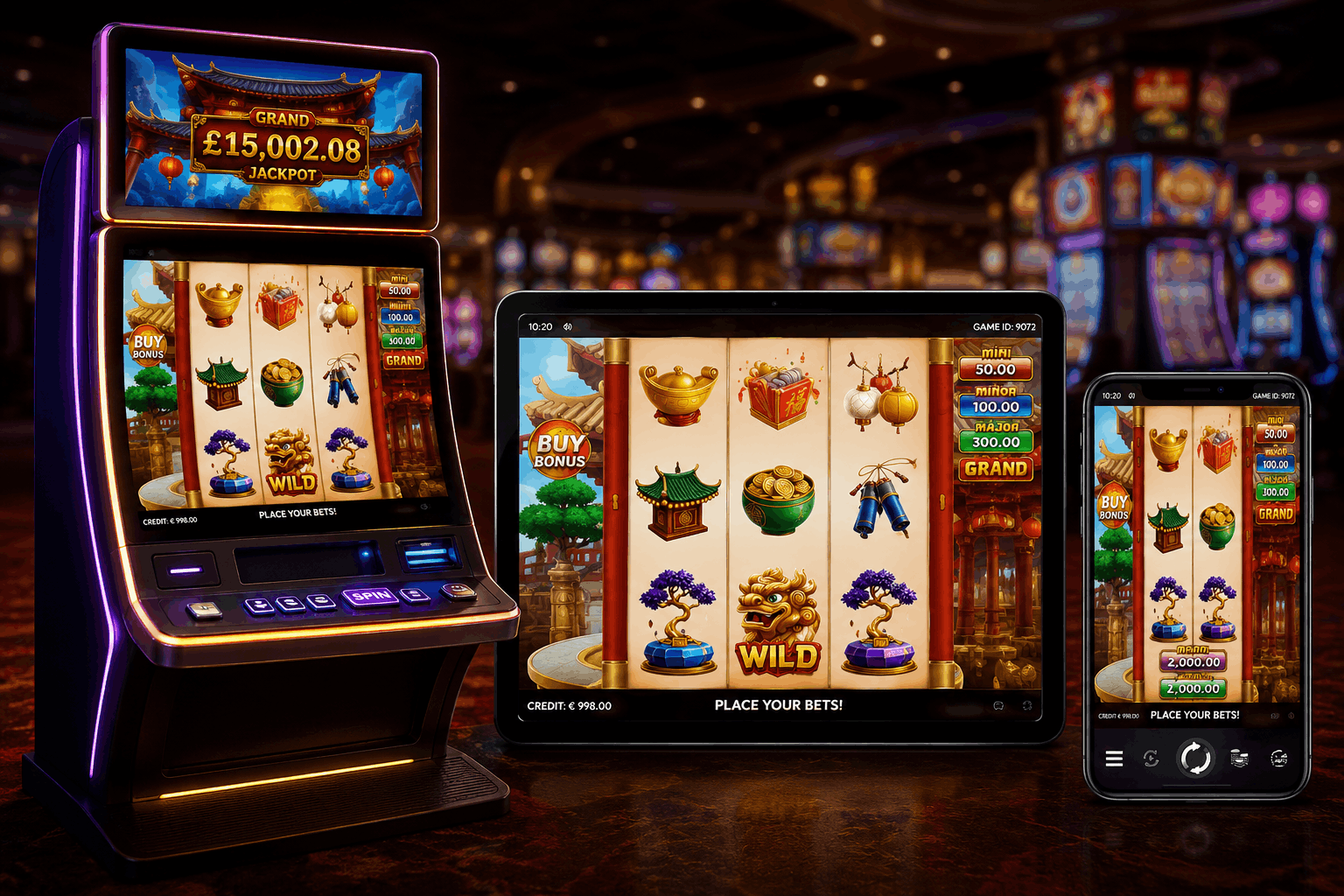

Both traditional and online slots spin reels and pay out based on symbol combinations. But beyond that shared foundation, they are fundamentally different products: different in economics, player experience, game mechanics, and business model.
This comparison is useful for two audiences. For players, it helps you make informed choices about where and how you play. For operators and slot game developers, the structural differences explain why the industry has shifted so decisively toward digital.
What Are Traditional (Land-Based) Slots?
Traditional slots are physical gaming machines installed in casinos, arcades, bars, and gaming halls. Modern land-based machines are electronic with video screens and computerized RNGs, but the physical cabinet format remains.
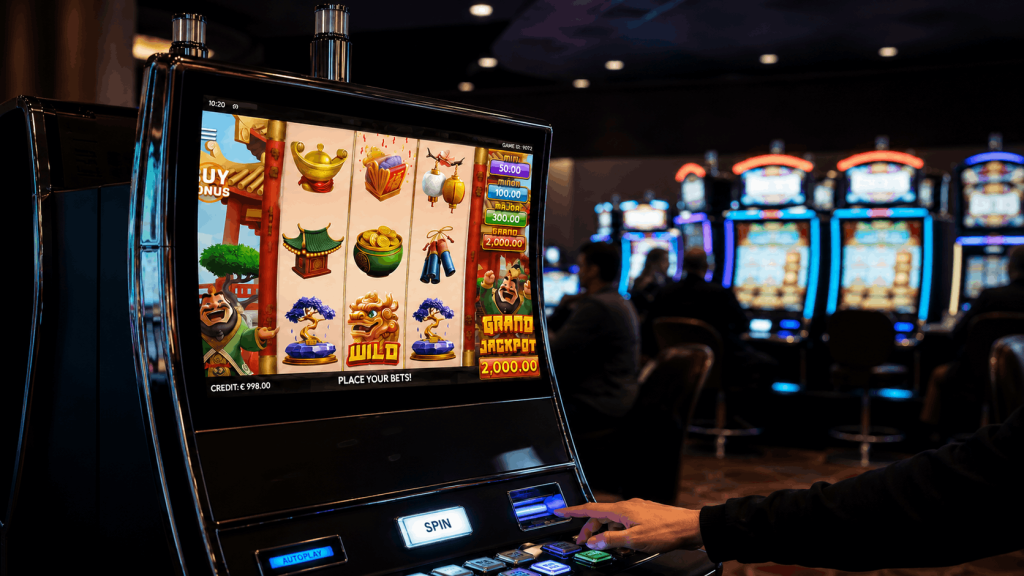
Players insert cash or a TITO ticket, press a button, and the outcome is determined by the machine’s onboard RNG. The physical format creates a specific experience: casino floor ambience, social proximity, and the sensory immersion of a dedicated gaming environment.
What Are Online Slots?
Online slots are digital games delivered through casino websites, mobile apps, or aggregated game libraries. They run on a remote game server (RGS) that processes every spin using a certified RNG, with the client rendering in a browser or native app.
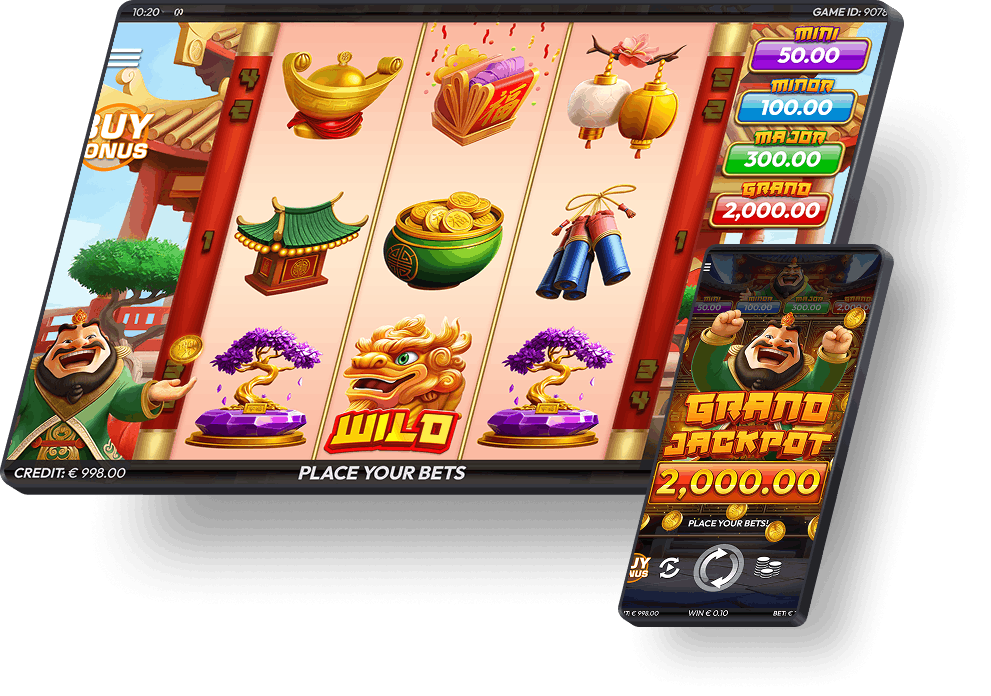
Modern online slots feature cinematic animation, dynamic bonus mechanics, multi-level progressive jackpots, and personalization features impossible to implement in physical hardware.
Types of Online Slot Games
The online slot category has diversified significantly. Understanding the main types clarifies what “online slots” actually encompasses.
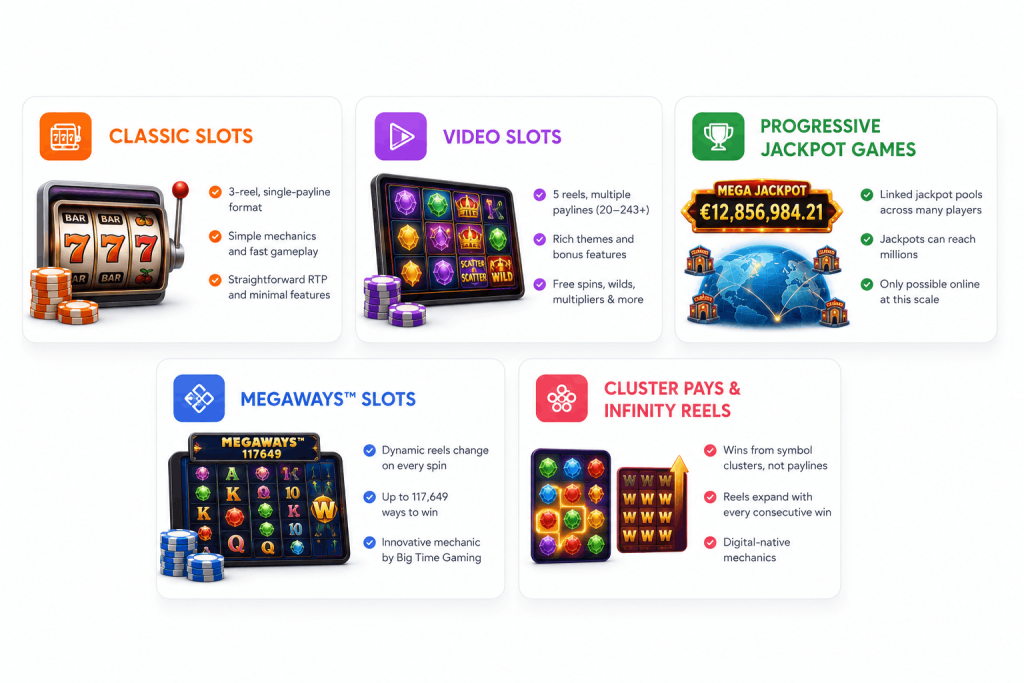
- Classic Slots — 3-reel, single-payline format. Simple mechanics, fast gameplay, no complexity
- Video Slots — 5 reels, 20 to 243+ paylines, layered bonus features. The dominant format
- Progressive Jackpot Games — pooled prize networks across multiple casinos, reaching millions
- Megaways Slots — dynamic reel mechanic creating up to 117,649 ways to win per spin
- Cluster Pays and Infinity Reels — mechanic innovation native to digital, no physical equivalent
Traditional vs Online Slots: Key Differences
| Basis of Differences | Online Slots | Land-Based Slots |
| Convenience and Accessibility | Any device, anywhere, anytime | Requires physical presence at a venue |
| Game Variety | 5,000 to 10,000+ titles per platform | 1,000 to 2,000 machines per floor |
| RTP and Payouts | Typically 92 to 97% | Typically 85 to 92% |
| Bonuses and Promotions | Welcome bonuses, free spins, cashback, loyalty tiers | Loyalty cards, occasional free play |
| Betting Limits | €0.10 to €100+ per spin, configurable | Fixed by machine hardware |
| Jackpots | Global networks, payouts reaching €17M+ | Regional networks, limited scale |
| Visuals and Graphics | Cinematic art, animations, dynamic environments | Constrained by cabinet screen |
| Game Mechanics | Megaways, cluster pays, cascading reels | Standard reel formats |
| Security and Fairness | Certified RNG, full digital audit trail | Physical machine testing and oversight |
| Player Experience | Convenience, personalization, game variety | Occasion, atmosphere, social environment |
Accessibility and Convenience
Land-based slots require physical presence at a venue, which means travel time, travel cost, and operating hour constraints. The experience is episodic by nature.
Online slots are accessible from any internet-connected device at any time. A player can open a game on their phone during a commute or from a laptop at home. Session frequency, monthly active player metrics, and lifetime player value are all structurally higher online because accessibility removes the primary barrier to play.
RTP and Payout Rates
This is where the structural economics diverge most sharply in the player’s favor online. Land-based slots typically operate at 85 to 92% RTP. Physical machines carry high operating costs (hardware, floor space, maintenance, staffing) that the house edge must recover.
Online slots typically operate at 92 to 97% RTP. Lower operating costs, competitive pressure from a global market, and regulatory minimums in tier-one jurisdictions all push online RTPs higher. Over extended play, a player on a 96% RTP online slot retains meaningfully more of their wager than on a land-based machine running at 88%.
Game Variety and Mechanics
A large casino floor might house 1,000 to 2,000 machines. Floor space and hardware costs impose hard limits on variety. Titles that underperform are expensive to replace.
An online casino can offer 5,000 to 10,000+ titles simultaneously from hundreds of developers. New titles can be added or retired based on real-time performance data. Mechanics like Megaways, cluster pays, and cascading reels are native to digital and unavailable in physical cabinets.
Bonuses and Jackpots
Land-based casinos offer loyalty card programs and occasional free play credits. Online casinos operate sophisticated bonus systems: welcome packages with deposit matches and free spins, reload bonuses, cashback programs, loyalty tiers, and personalized offers triggered by behavioral data.
Online progressive jackpots operate at global scale, linked across hundreds of casinos and millions of active players. Record payouts exceeding €17 million are not achievable through land-based formats where the network is constrained by physical footprint.
Pros and Cons of Traditional Slots
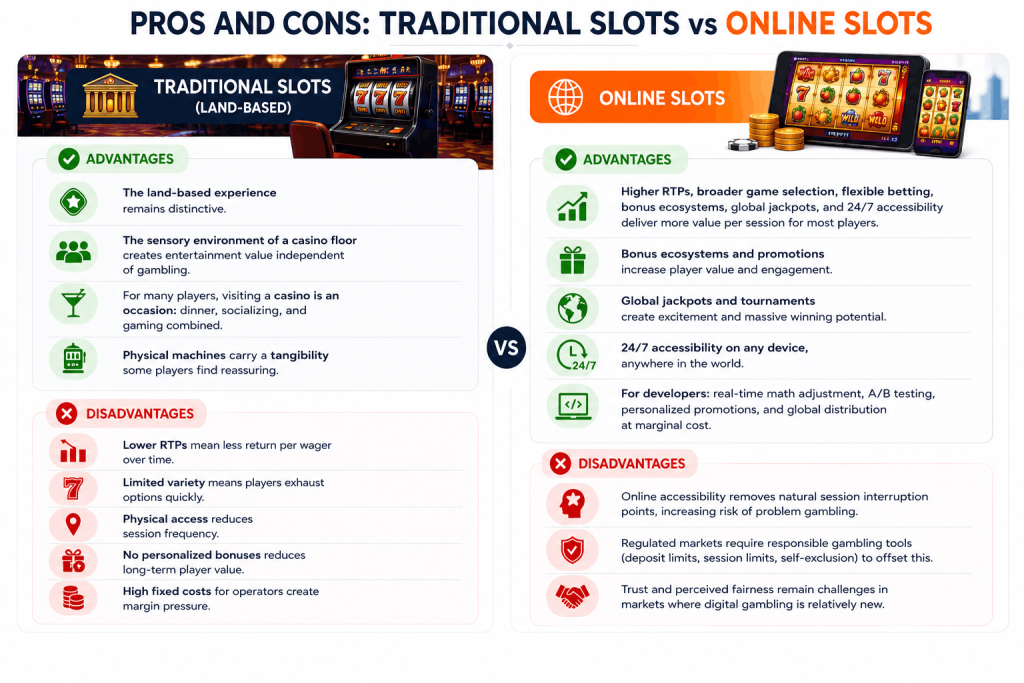
Advantages: The land-based experience remains distinctive. The sensory environment of a casino floor creates entertainment value independent of gambling. For many players, visiting a casino is an occasion: dinner, socializing, and gaming combined. Physical machines carry a tangibility some players find reassuring.
Disadvantages: Lower RTPs mean less return per wager over time. Limited variety means players exhaust options quickly. Physical access reduces session frequency. No personalized bonuses reduces long-term player value. High fixed costs for operators create margin pressure.
Pros and Cons of Online Slots
Advantages: Higher RTPs, broader game selection, flexible betting, bonus ecosystems, global jackpots, and 24/7 accessibility combine to deliver more value per session for most players. For developers, digital enables real-time math adjustment, A/B testing, personalized promotions, and global distribution at marginal cost.
Disadvantages: Online accessibility removes natural session interruption points, which is a documented risk factor for problem gambling. Regulated markets require responsible gambling tools (deposit limits, session limits, self-exclusion) to offset this. Trust and perceived fairness remain challenges in markets where digital gambling is relatively new.
Which Is More Profitable: Online Slots vs Real Slots?
From an operator perspective, online slots win decisively. The margin structure, scalability, and data capabilities of online platforms make them significantly more profitable per invested dollar than equivalent land-based operations at scale.
Global online gambling revenue exceeded $100 billion in 2024 and is projected to grow at 11 to 12% annually through 2030. Land-based casino revenue is growing at 2 to 4% annually in established markets. Every major operator including MGM, Caesars, Entain, and Flutter has made digital investment their primary growth strategy.

The player demographic driving this shift is not simply replacing land-based with online. It is a generational expansion. Younger players who grew up with smartphones are entering gambling markets as online-first consumers. They encounter online slots before land-based machines, and their spending patterns reflect that. The addressable market for online slots is growing. The land-based market is largely competing for share of an existing player base.
For game developers, the innovation and growth opportunity are in online formats. Games developed for online distribution reach a global audience through aggregator platforms at marginal cost. Games developed for land-based distribution are constrained by physical installation and regulatory jurisdiction.
How Game Art Bridges Both Formats: Mythology Slot Case Study
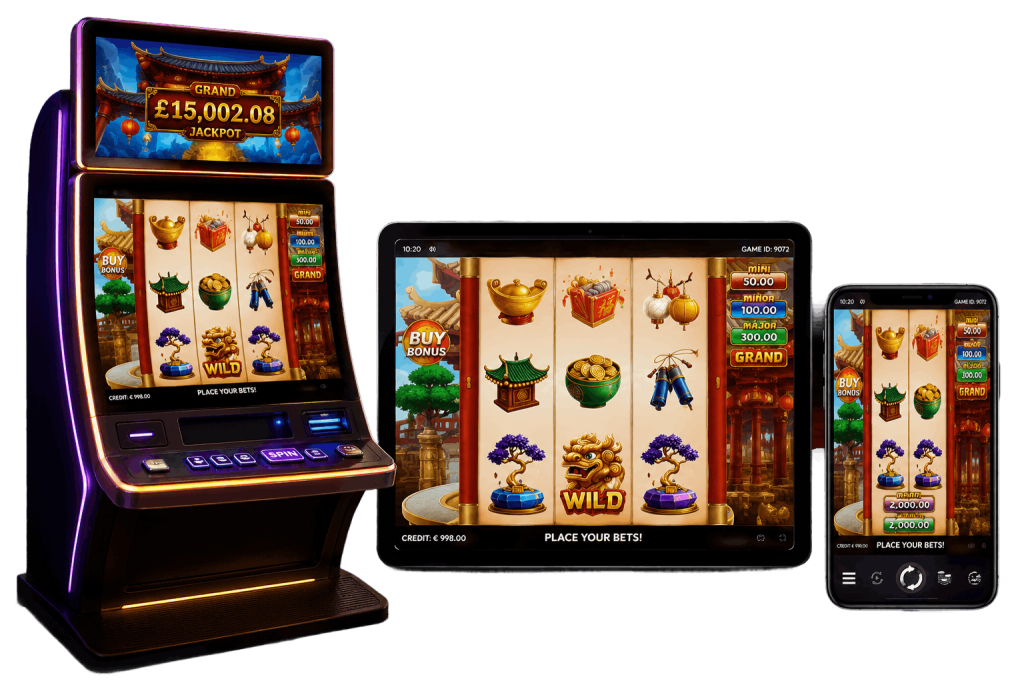
Twin Win Games recently delivered a full art and animation package for a mythology-themed slot scoped for both land-based cabinet deployment and online HTML5 distribution. The project required symbol designs, backgrounds, and animation states compliant with the different resolution profiles, frame budgets, and rendering constraints of both formats.
Looking to bring your slot concept to life? Explore our slot game art services for original visuals, animations, and UI, or choose our slot game reskin services to give an existing title a fresh look and new market appeal.
Build Your Online Slot Game with Twin Win Games
Twin Win Games builds full-cycle online slot games for operators, studios, and aggregators worldwide. Our 110+ in-house specialists cover math design, art production, engineering, QA. We deliver complete slot games in 2 to 5 months, compared to the 8 to 12 month industry average, for clients including Aristocrat, Relax Gaming, and William Hill.
👉 Looking to build your next slot game? Contact Twin Win Games.
Conclusion
Land-based slots offer occasion, atmosphere, and tactile experience the digital format does not replicate. Online slots offer higher RTPs, greater game variety, flexible betting, and anytime access. For players making economic decisions, the math favors online. For players who value the casino environment as entertainment, land-based retains genuine appeal.
For operators and developers, the strategic direction is clear. Online slot markets are growing. The development economics, data capabilities, and global distribution reach of digital formats make online the primary growth opportunity for the foreseeable future.
FAQ
What is the best way to pick a slot machine?
For land-based machines, look for posted RTP information or ask staff. Higher denomination machines typically offer higher RTPs.
For online slots, check these factors before playing:
- RTP documented in the game’s paytable. Look for 96% or above
- Volatility: low volatility pays smaller amounts frequently, high volatility pays larger amounts infrequently
- Match volatility to your session budget. Limited budgets are better served by low-to-medium volatility
- Confirm the casino holds a license from UKGC or MGA before depositing
How can I develop my own online slot machine?
Online slot development requires math model design, art and animation production, software engineering, and regulatory certification. Most operators commission from a specialist studio rather than building in-house capability from scratch.
Twin Win Games develops complete online slot games from concept to certified launch in 3 to 6 months. Get in touch.
Are online slots safer than traditional slot machines?
For outcome fairness, certified online slots are more transparent. Every game has its RNG independently certified and its math model verified against actual payout performance.
For responsible gambling, the picture is more nuanced. Online accessibility removes natural session interruption points. Players in licensed markets should use responsible gambling tools proactively. Using casinos licensed by UKGC or MGA provides the strongest protection overall.