
If you are planning a slot game, Unity is often the first engine that comes to mind. It powers a large share of the world’s games, so it is a fair question whether it suits slots as well.
For real-money slots, the answer is almost always no. This guide explains why, what the alternative looks like in practice, and how to choose the right engine for your game. We build our own slots on HTML5 with a proprietary engine, and the reasoning below is the reasoning behind that choice.
What Unity Does Well
Unity is an excellent engine, and nothing in this guide argues otherwise.
- Cross-platform reach. One codebase can target desktop, mobile, and consoles.
- Strong 2D and 3D tooling. It handles complex scenes, physics, and 3D environments well.
- A large ecosystem. The Asset Store, extensive documentation, and a big developer community make it quick to start.
For 3D games, console titles, and native mobile apps, these strengths are real. The question for slots is narrower, and it comes down to how a slot actually reaches the player.
Slots Run in the Browser
A real-money slot is delivered through operator platforms and aggregators, and it opens in the player’s browser. There is no app to install. The player taps a game in a casino lobby and expects it to load and play within seconds.
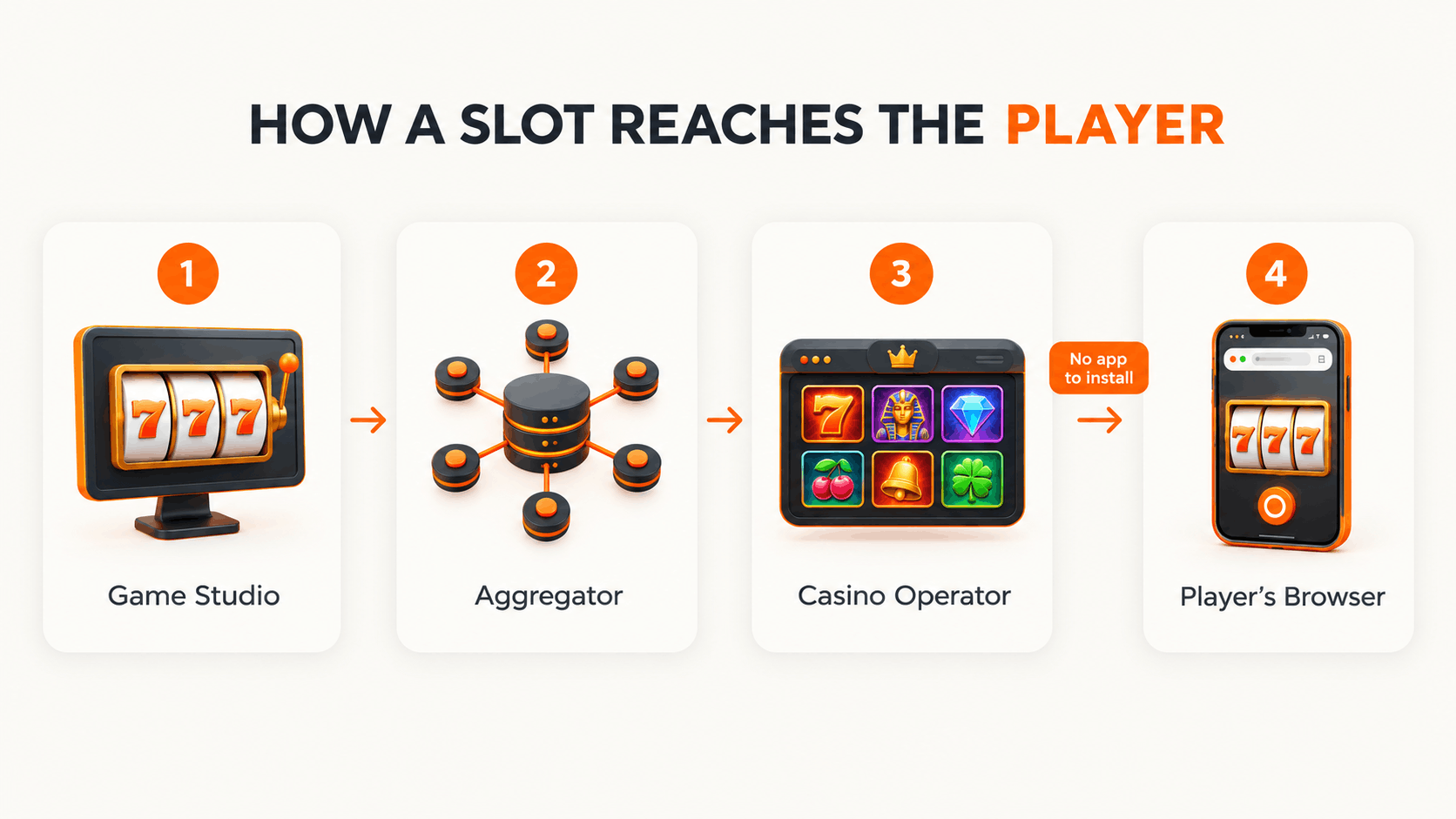
That delivery model decides the engine.
It also matches where the market is growing. Grand View Research values the global online casino market at $23.9 billion in 2026, rising to $38.0 billion by 2030, and attributes that growth mainly to smartphone penetration and faster internet. Most of those players are opening slots in a mobile browser.
Three Reasons HTML5 Wins for Slots
1. Device and browser coverage
A slot has to run on whatever device and browser a player opens it on: older Android phones, iOS Safari, low-memory devices, and everything between. Unity’s browser builds are heavier and can struggle across that range. A lightweight HTML5 client runs consistently across it, which matters because every device a game fails on is a player the operator loses.
2. Load time
Browser slots compete on the first few seconds. A player who opens a game from a lobby and waits too long simply picks another one. A Unity browser build carries the engine’s runtime with it, while a lean HTML5 client loads the game and little else.
3. Licensing risk
Unity is a commercial engine governed by license terms its owner sets and can revise. For a slot portfolio intended to earn for years, building on terms outside your control is a long-term business risk. HTML5 runs on open web standards, and widely used renderers such as PixiJS are open source.
“A slot opens in the player’s browser, with no app to install, and that decides the engine. Unity brings device and coverage problems, and licensing questions that serious studios would rather avoid. For slots, there is simply no reason to use it.” – Pavlo Ratushnyi, Head of Development at Twin Win Games
Unity vs HTML5 for Slots at a Glance
| Unity | HTML5 | |
|---|---|---|
| Delivery | Native app, or a browser build | Runs natively in the browser |
| Load time in the browser | Heavier, carries the engine runtime | Lightweight, fast first load |
| Device coverage | Can struggle on older or low-memory devices | Consistent across devices and browsers |
| Licensing | Commercial engine, terms set by the vendor | Open web standards and open-source renderers |
| Best suited to | 3D games, console titles, native mobile apps | Browser-delivered real-money slots |
What an HTML5 Slot Pipeline Looks Like
Choosing HTML5 is the start. What makes a slot perform is how the engine and pipeline behind it are built.
Our slots run on a proprietary game engine built on PixiJS, using an ES6 Entity Component System architecture. The same principles apply to any well-built HTML5 slot:
- Data-driven game logic. Paytables and feature configurations live in data, so new variants can be created without rewriting code.
- Deterministic presentation. Reel spins and win animations are choreographed to display a result the certified RNG has already decided. The animation presents the outcome and never determines it, which is what keeps the game certifiable.
- Optimized rendering. Sprites and UI are packed into texture atlases to reduce draw calls, which keeps frame rates stable on mid-range phones.
- Object pooling. Symbols and effects are reused through pooling, which avoids memory spikes during long sessions.
- Modular structure. Reel logic, UI, and feature systems are kept separate, which makes updates, reskins, and compliance reviews faster.
The math sits underneath all of it. Every model is designed and validated through slot game math before production, so the engine presents numbers that have already been proven.
HTML5 Slots in Live Operation
These are HTML5 slots built on our own engine and running across operator platforms.
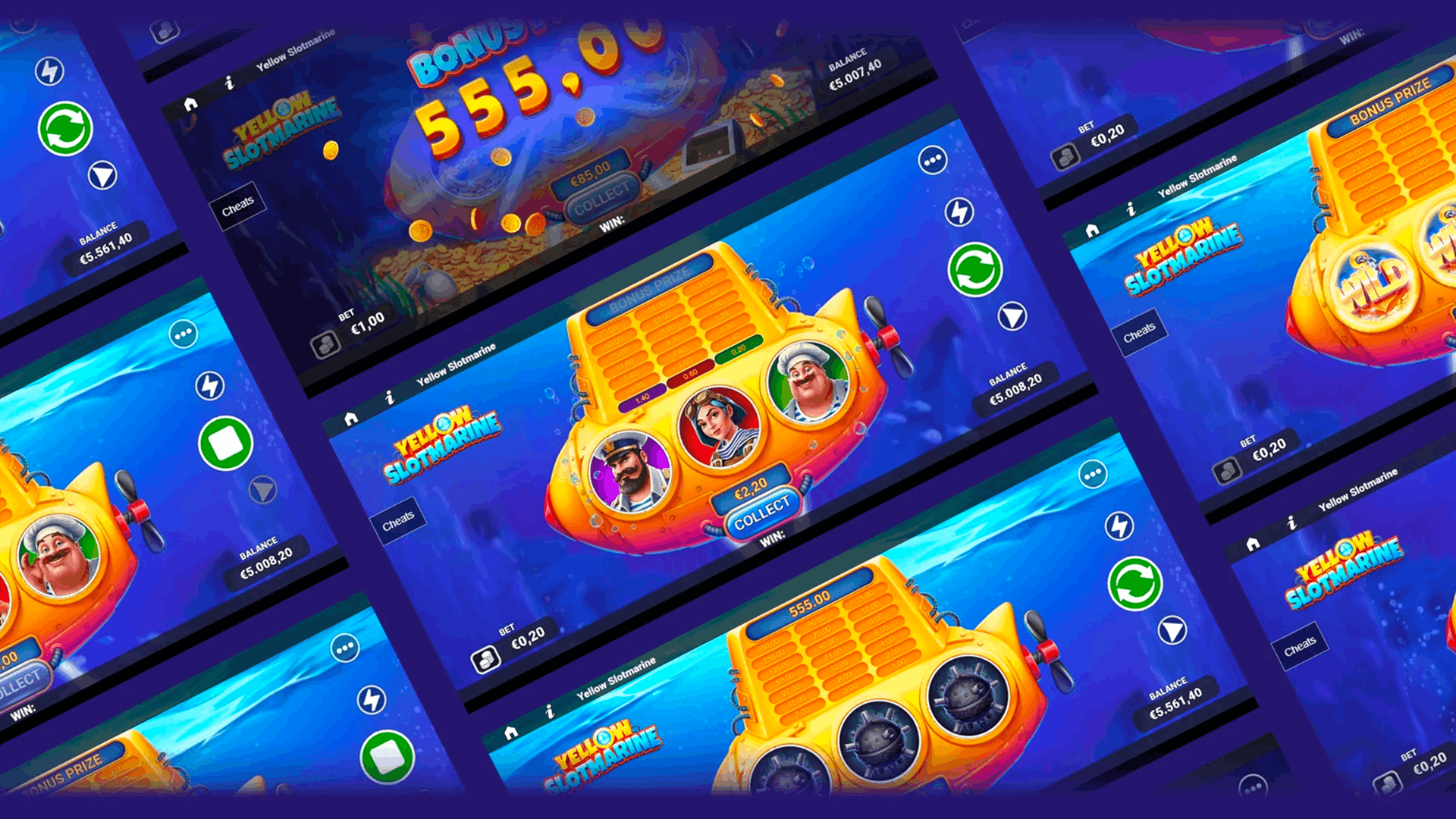
Yellow Slotmarine
- 5,680 total active players
- 267,178 total rounds played
- $451,617.01 total wagers
- $55,372.47 gross gaming revenue
- 4.1 average active operators, 3.32 average brands per operator
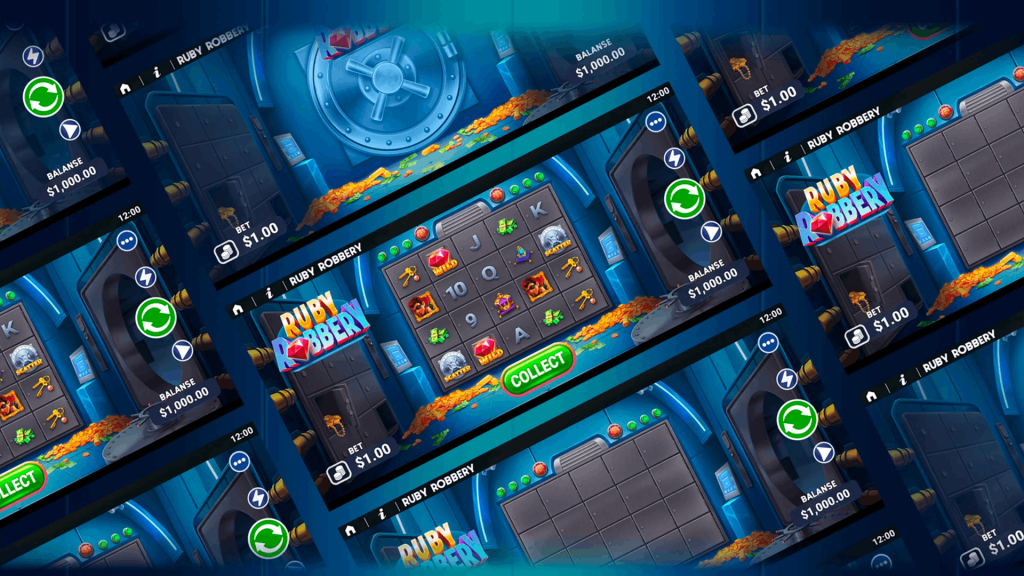
Ruby Robbery
- 14,601 total active players
- $1,084,606.48 total wagers
- $43,031.80 gross gaming revenue
- 6.4 average active operators, 1.44 average brands per operator
Bank Wagon Heist
- Built on our ES6 Entity Component System engine with PixiJS
- 94.01% RTP with high volatility
- Certified for the UK, Malta, Latvia, and Portugal
Each runs in the browser across multiple operators and brands, which is exactly the delivery model an HTML5 engine is built for.
Cost and Timeline
Slot development typically ranges from $35,000 to $200,000+, depending on:
- Scope and complexity. Standard reels and a few features sit at the lower end. Layered mechanics and several bonus rounds sit higher.
- Art and animation quality. Higher production values raise cost and usually improve player retention.
- Features and mechanics. Progressive jackpots, cascading reels, and multi-stage bonuses each add complexity.
- Markets and certification. Each target jurisdiction brings its own compliance and testing requirements.
Typical timeline:
- Pre-production, concept and math: 2 to 4 weeks
- Development and asset creation: 2 to 6 months, depending on feature complexity
- Testing and certification: 4 to 8 weeks
Frequently Asked Questions
Can you build slot games in Unity?
It is possible, and some studios do. For real-money slots it rarely makes sense. Slots open in the player’s browser, where Unity’s heavier builds, device coverage issues, and licensing terms all work against it. We build our slots on HTML5 with our own engine.
Why are most online slots built in HTML5?
Because real-money slots are delivered in the browser through operator platforms and aggregators. HTML5 loads fast, runs consistently across devices and browsers, and avoids dependence on a commercial engine’s license terms.
What engine does Twin Win Games use for slots?
A proprietary game engine built on PixiJS, using an ES6 Entity Component System architecture. It is designed for browser delivery, fast loading, and performance across mobile devices.
Is Unity a good engine for casino games?
Unity is a strong engine for many kinds of games, particularly 3D titles and native apps. For browser-delivered real-money casino games, including slots, HTML5 is the better fit.
How long does it take to develop a slot game?
A simpler slot typically takes around three to four months, and a complex multi-feature slot six to nine months, including testing and certification.
How much does it cost to develop a slot game?
Budgets typically range from $35,000 to $200,000+, depending on complexity, art and animation quality, features, and the number of target markets.
Planning a Slot Game?
Twin Win Games builds slots on HTML5 with our own proprietary engine, covering math, art, animation, development, QA, and certification support. With 13+ years in game development, 1,000+ released titles, and 198+ clients worldwide, we build slots designed to load fast and perform across every device.