By Anna Vasylkivska, Head of Production, and Daria Tovpinets, Art Director, at Twin Win Games
Twin Win Games’ Head of Production and Art Director spent Gamescom 2026 in back-to-back meetings with studios and publishers. Here are the production and art trends that stood out, from the AI divide to the return of handcrafted art.
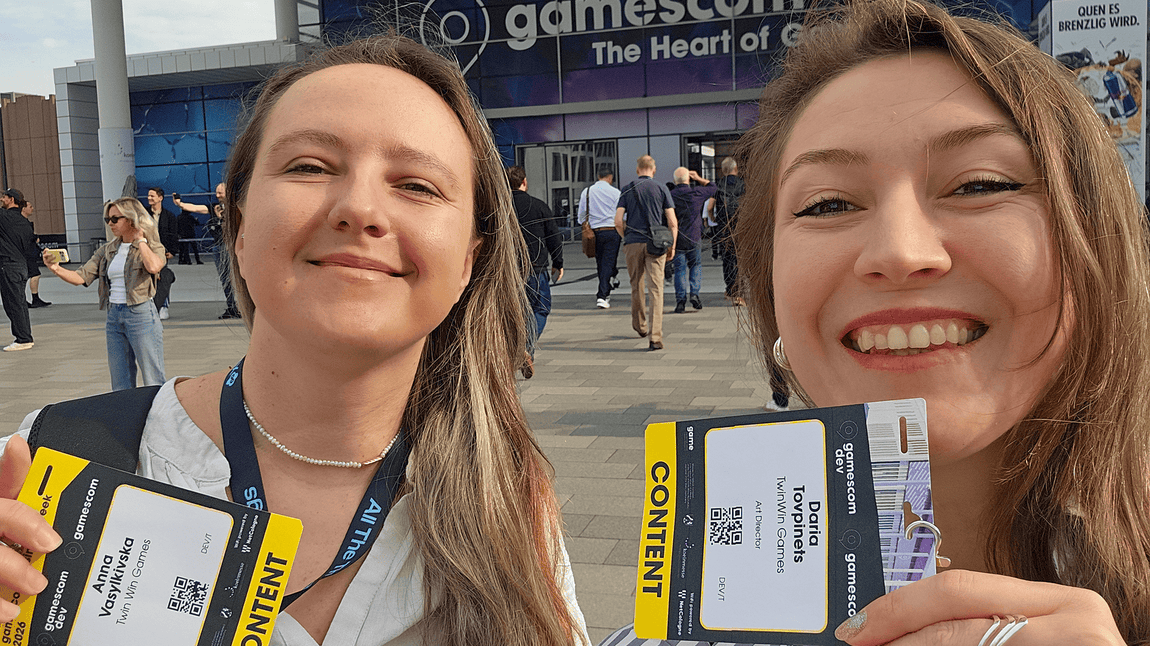
We came to Gamescom 2026 with two different lenses. Anna runs production and delivery and Daria leads art direction at Twin Win Games. So between us, we skipped the spectacle and spent the show hearing what studios are actually struggling with, what they are buying, and where production and art are heading next.
Gamescom gave a lot of answers. Here is what stood out.
First, the scale
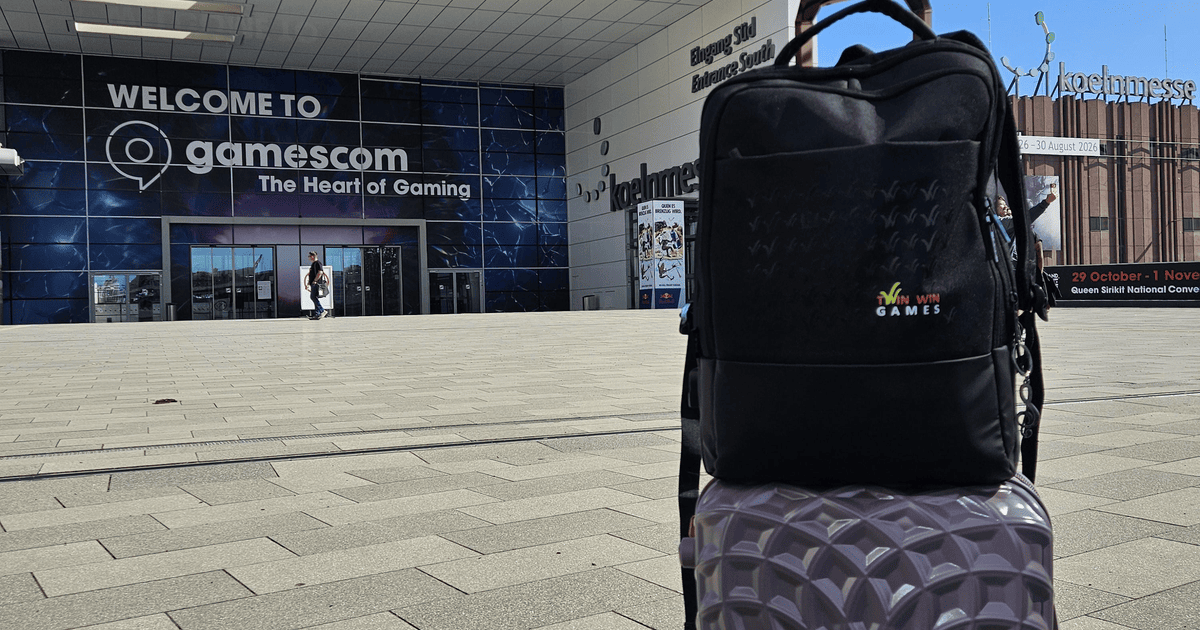
Gamescom is enormous. If you have only ever done ICE or iGB, recalibrate. This is at least three times the size, and the same company can appear in three different halls at once: one booth for game presentations, one for business lounges, and one for merch and fan content.
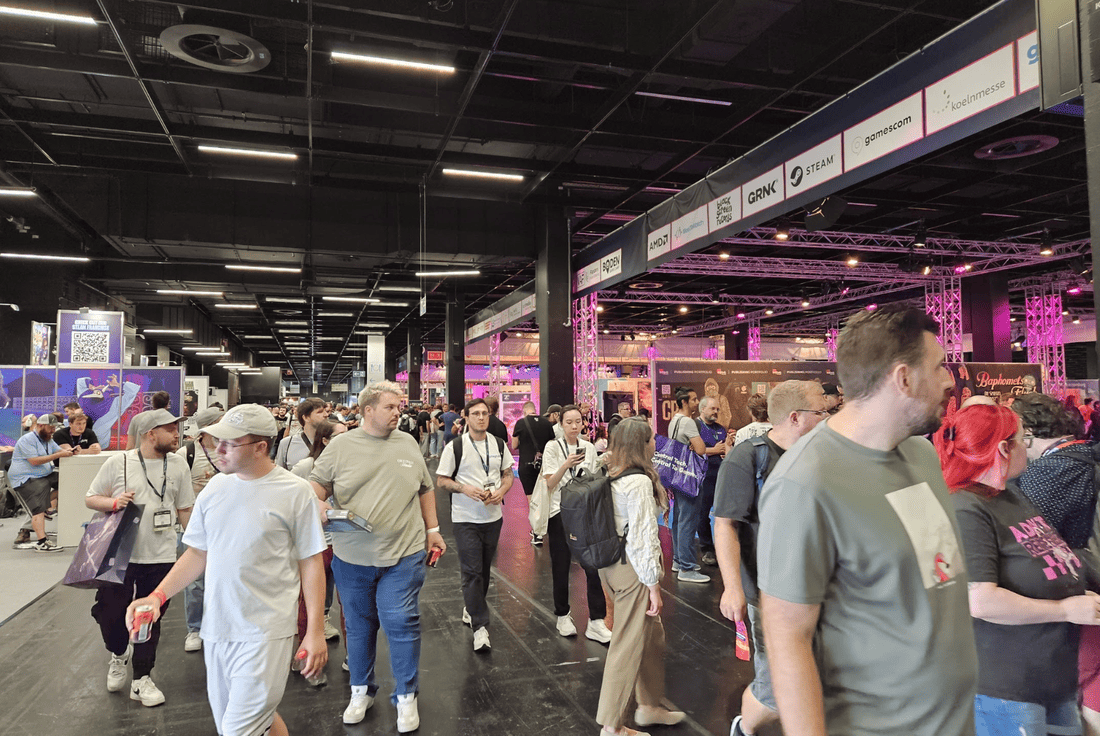
That scale matters for a practical reason. Unlike the tighter iGaming shows, there are almost no good seated meeting zones. The official meeting areas only admit you with a table booked well in advance. In practice, most real conversations happened standing in a hall, or in whatever quiet-ish corner we could find. If you are planning Gamescom for business development, book everything early and accept that the best talks will still happen on your feet.
The AI divide is now the central production question
If there was one theme running through nearly every serious conversation, it was artificial intelligence, and specifically, where it is acceptable and where it is not.
The clearest driver is Steam. Valve briefly rejected games over AI assets in 2023 on copyright grounds, then reversed course in January 2024 into a disclosure regime. Developers now have to disclose generative AI use, in a manner similar to how mature content is flagged. An AI coding assistant does not trigger the label. AI-generated art, audio, dialogue, localization, or marketing material does.
Why studios care so much came into focus with the data. A Game Oracle study of thousands of 2025 releases estimated that a game carrying the AI-disclosure label receives roughly 53% fewer reviews than a comparable game without it, along with lower average ratings. The effect concentrated among established studios, with estimated sales declines of 40 to 60%, while lower-profile developers saw little measurable difference. The reading is straightforward: large publishers have the brand recognition to absorb the sentiment, but the penalty shows up most where audiences expect handcrafted work.
That single dynamic explains a pattern we heard again and again: many teams now want minimum AI in anything that ships.
But it is not a blanket no, and the nuance is what matters for production planning:
For concepting, mood boards, and inspiration, AI is widely used and uncontroversial. That is internal work that never reaches a store page.
For anything shipping to Steam, teams are cautious to the point of avoidance in final art and audio. Several told us they want fully handcrafted assets, full stop.
For web-first titles that never touch Steam, the concern mostly disappears.
For mobile-only titles, it depends on whether they might later release on Mac or desktop, which usually means Steam eventually, which brings the caution back.
On the development side, the picture split too. Some teams use AI coding assistants freely for prototyping. Others allow AI only as a replacement for a Stack Overflow search or during code review, with a firm rule that not a single line of shipped code may be AI-written, citing legal risk.
The takeaway for anyone running an art or code pipeline in 2026: your AI policy has become a commercial and reputational decision that your clients and their players are actively watching, far more than the internal efficiency question it once was.
Anna Vasylkivska, Head of Production: “We have put a lot of work into adopting AI across the whole company, art, development, QA, and delivery itself, including AI-assisted risk detection and estimation. It cut our production hours nearly in half. But adoption and policy are two different things. Where a game ships decides how much AI can touch the final product, so the real skill now is knowing exactly where it helps and where it becomes a liability for the client.”
Handcrafted art is a selling point again
Closely tied to the AI question, we heard a recurring frustration from studios about their existing vendors. A common story: a partnership that started strong, then drifted into what one might politely call generated filler. Teams that value their visual identity are actively looking to move away from that and back toward genuine, handcrafted art direction.
Daria Tovpinets, Art Director: “Part of this is the reaction from players. Experienced gamers recognize AI-generated content quite well, and sometimes its use reads as disrespectful to the audience, or as a sign that less attention is being paid to the art. There is also a practical side: platform restrictions. Serious companies planning to release on Steam tend to limit AI-generated graphics, especially at the final stages. AI still has a real place for us in pre-production, to quickly explore ideas, directions and references, and create the first visual iterations. For final art, though, the human eye and handcrafted work stay irreplaceable, especially when the goal is a unique visual style.”
This is a real shift. For years the pressure was purely on speed and cost. Now, for a meaningful segment of studios, provable human craft has become a differentiator worth paying for, especially for anyone targeting storefronts and audiences that reward it. It is exactly why we keep game art production fully in-house.
“Triple-A quality at double-A price”
One phrase summed up the commercial reality better than anything else we heard: studios want triple-A quality at a double-A price. The bar for craft keeps rising, budgets do not rise to match, and, increasingly, they want it without AI in the shipped product. That squeeze is the real story behind almost every art conversation at the show.
It also shapes what studios are actually making. Outside the handful of true triple-A booths, the art we saw skewed away from photorealism. Among smaller and indie developers, the dominant direction was stylized: casual styles, clean 2D, vector and even deliberately retro looks, most of it built around a distinctive hook first and raw fidelity second. The work that stood out was chasing originality and an emotional response, a recognizable identity a player remembers.
For anyone planning an art pipeline, that is a useful signal. The demand has shifted from “make it look real” toward “make it look like us, and make it look intentional.” And practically, most of what we saw among the studios we spoke with was 2D, which matters when you plan the skills and capacity a project will actually need.
Daria Tovpinets, Art Director: “Photorealistic AAA is gradually becoming a more niche genre for a hardcore audience. A growing share of the market is games that are simpler to develop and easier to pick up: bright, dynamic projects that don’t demand a lot of experience from the player. You see it in the visual language too, sharper and faster animation, visuals that let a player immediately understand what is happening on screen. Part of it is how people play now: it is harder to hold attention on complex storylines for long, so projects adapt to a faster, more dynamic way of interacting. And there is a clear return of pixel art and nostalgic references to early-console graphics. No matter how much the industry changes, I think that aesthetic stays relevant.”
On what “triple-A quality at double-A price” actually demands of a team, Daria is direct:
Daria Tovpinets, Art Director: “It is primarily about setting the right priorities. You can’t make everything equally expensive, detailed and time-consuming. The team has to understand where quality really affects how the player perceives the game, and where a more efficient solution will do. That takes strong art direction and a well-structured pipeline, constantly balancing quality, deadlines and budget while protecting the overall visual impression. AAA quality on an AA budget comes down to one thing: choosing exactly what needs to be done at a AAA level, and delivering it there.”
The demand is for a stable resource, not one-off freelancers
A second production pattern came up repeatedly. Many studios do not actually need a burst of freelance hours. They need a stable, reliable art resource that can hold a consistent style over time.
The tension we heard most often: management wants to outsource to keep up with volume, because the in-house team cannot sustain the required output. But the art directors resist outsourcing, because handing work to scattered freelancers dilutes the style. Add heavy feedback-and-iteration cycles on top, and the in-house team falls further behind.
Anna Vasylkivska, Head of Production: “When a studio says it wants a steady set of assets every month without losing its style, that is a delivery question at its heart. The answer is mature processes and self-sufficient teams, with control points instead of micromanagement, so quality holds and delivery does not depend on any single person. That is exactly what a good outsourcing partner should bring: predictability as the scope grows.”
Daria Tovpinets, Art Director: “The key factor is well-established communication with the client. It goes beyond receiving a brief and executing it. You really study their previously released projects, their references and visual preferences. You need to understand their vision of both the process and the result, their target audience and their sources of inspiration, and, crucially, the reason they want it to look that way. That is when style stops being just a set of visual rules. You start to understand the logic behind it, which lets you hold that style even on completely new tasks. As they say, if you want to catch a unicorn, you have to think like a unicorn.”
This is precisely the gap a mature outsourcing model is built to close. A dedicated, stable team held together by strong art direction that keeps the client’s style intact as the work scales. When studios told us they wanted someone who could reliably deliver a set volume every month without style drift, they were describing a delivery challenge at its core, one that the right partner structure solves. It is the same thinking behind how we run custom game development: mature processes and self-sufficient teams, so delivery stays predictable as scope grows.
Reputation and confidentiality are part of the conversation
One more theme worth naming, especially for those of us with roots in iGaming. Some studios, particularly in family and children’s content, are careful about who they are publicly associated with. For them, working with a studio that also builds casino games raises a reputational question that matters to players, parents, and their own business partners alike.
The workable answer, which we discussed in several conversations, is white-label production under a strict NDA. It lets a studio access the craft and capacity they need while keeping the commercial relationship entirely confidential. If confidentiality is a precondition for you, treat it as a normal and solvable part of the setup.
The smaller signals that still tell you something
A few other observations that say more than they first appear:
Physical business cards are alive and well. Nearly everyone asked for one and offered their own. Some people were genuinely surprised when we suggested connecting on LinkedIn instead. The follow-up culture is strong and expected, so plan to actually send those follow-ups.
Time-to-market is longer than iGaming instincts expect. When Anna asked, out of habit, how many titles a studio planned to release by year end, several were almost taken aback. The release cadence is a different world from the volume iGaming lives in, and it changes how you plan a partnership.
What we took home
Gamescom 2026 confirmed something we already build our delivery model around. The market is moving toward provable human craft, stable and style-consistent production capacity, disciplined and transparent AI policy, and partners who can operate confidentially when the client needs it.
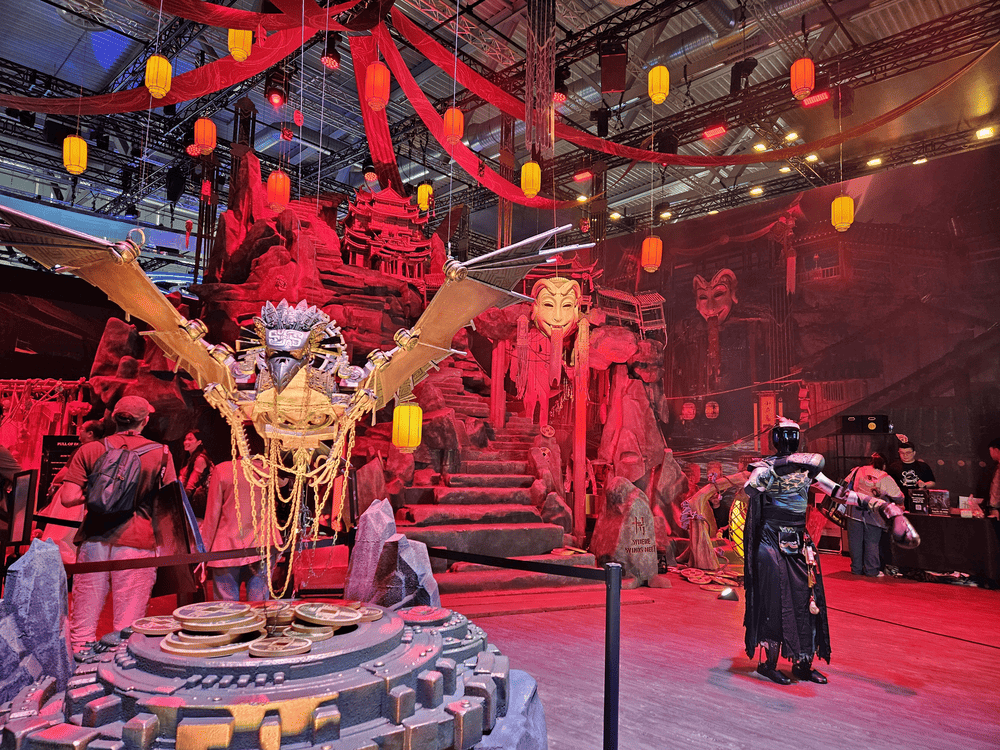
Daria Tovpinets, Art Director: “A lot of AAA studios approached their booths with an incredible amount of thought. What I liked most was how some recreated the in-game environment in the real world, so fans could feel like an actual part of the game, both emotionally and physically. The use of lighting impressed me too. Light is an incredibly powerful visual tool, and it is becoming an increasingly independent part of the visual experience. Used well, you don’t always need huge amounts of highly detailed scenery, atmosphere can be created through much simpler means. If there is one thing I’d bring into our own projects, it’s this: think about the level of detail in the art, and just as much about the atmosphere and the emotional response it creates.”
At their core, those are delivery and art-direction questions. Which is exactly why they are worth paying attention to.
This is what fit in an article. The rest we save for the studios we build with.
Bring us your project, and we’ll bring the production and art expertise to match.