Choosing a slot game art partner is one of the most consequential decisions a casino studio makes. The visual layer of a slot, its symbols, backgrounds, character animation, and UI, shapes player retention as much as the math behind it.
There is no shortage of studios offering slot art. The hard part is telling a specialist that delivers production-ready assets from one that produces attractive concepts and leaves the rest to you.
We are a slot art studio ourselves, so this guide sticks to the criteria we would use to judge any partner, including us. It covers what makes slot art a specialist discipline, what to look for, what a full engagement should include, typical costs and timelines, and the questions worth asking before you sign.
Why Slot Art Is a Specialist Discipline
Slot art looks like general game art, and it works under very different constraints.
A slot artist has to design symbols that read instantly at the small sizes they appear on a mobile reel, often while the reels are still moving. They have to keep payline wins visible against busy backgrounds, work within animation frame budgets for every symbol, and follow the theme conventions operators and players expect.
A generalist studio can produce beautiful artwork and still miss all of these. The result looks good in a portfolio and fails in a live game. Our practical guide to 2D game art goes deeper into these production constraints.
What to Look for in a Slot Game Art Company
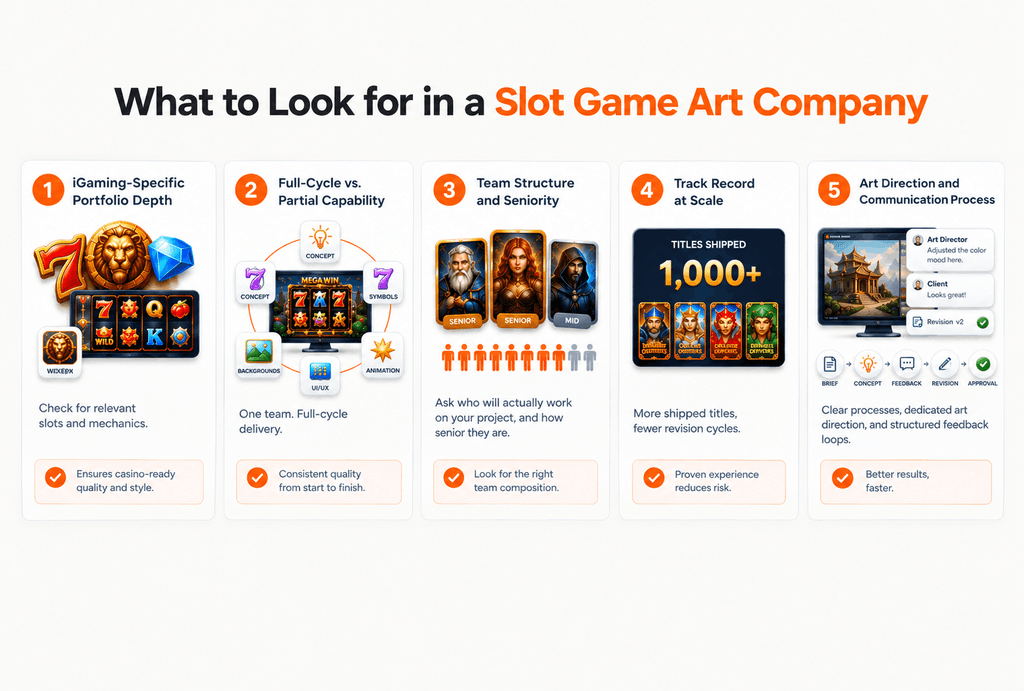
1. A slot-specific portfolio
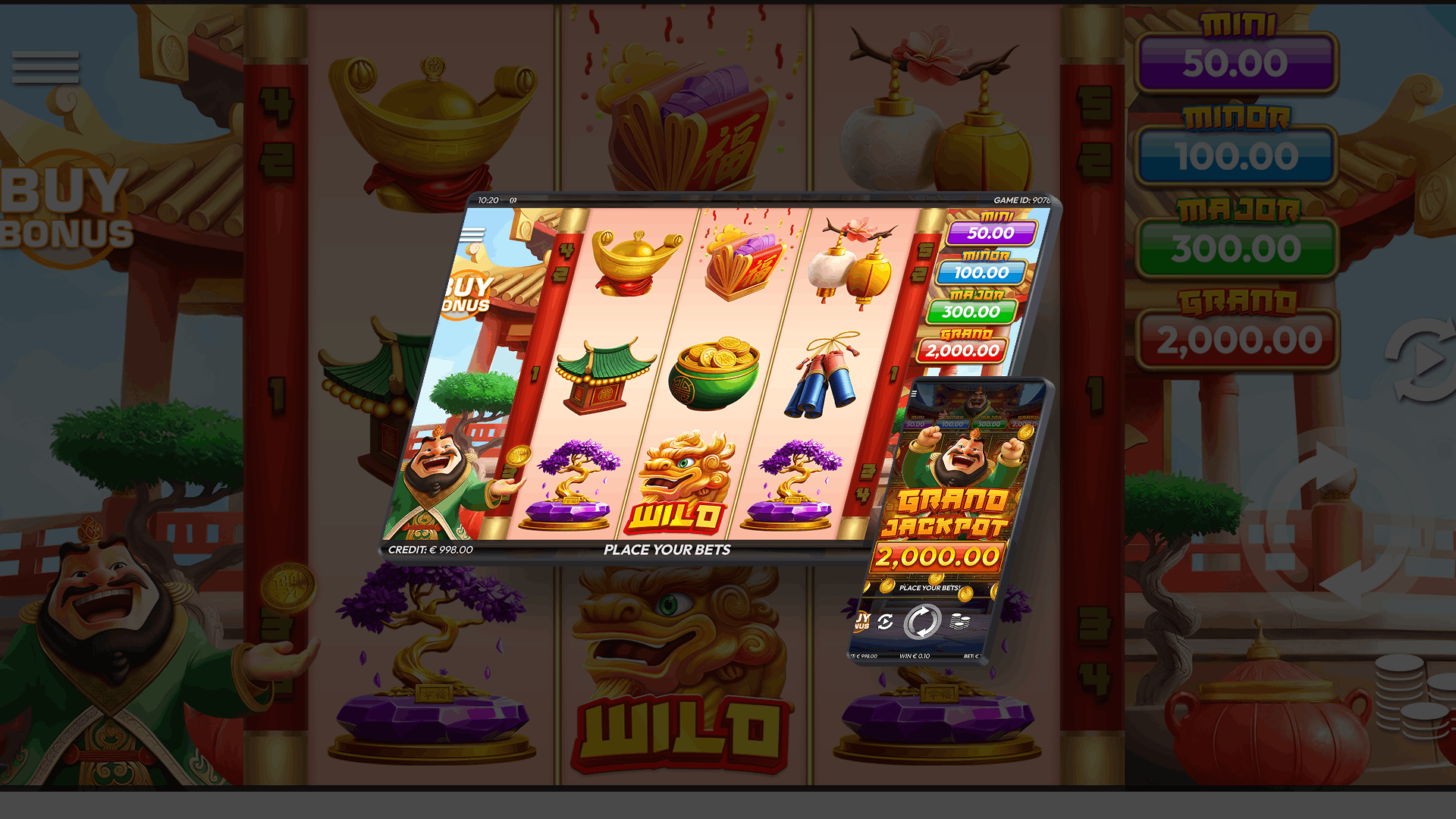
Ask to see casino and slot work specifically, separate from general game art. Look for full symbol sets, finished game screens, and bonus sequences, and check whether the titles actually shipped. Concept art on its own tells you little about production readiness.
2. Full-cycle capability
Find out whether the studio handles concept art, symbols, backgrounds, UI, and animation under one roof, or specializes in a single layer. Splitting a slot across several vendors, one for symbols, one for backgrounds, one for animation, introduces style inconsistency, version control problems, and extra contracts to manage.
3. Team structure
Ask how much of the work is done by full-time staff and how much by contractors. Ask whether the senior artists behind the portfolio will actually be assigned to your project. A strong portfolio built by people who will not work on your game is a poor guide to what you will receive.
4. Track record at scale
A studio that has shipped many slot titles calibrates “production-ready” differently from one that has shipped a handful. Experience at volume usually means better estimates, fewer revision cycles, and smoother handoff to development.
5. Art direction and communication
The best studios assign an art director who owns visual consistency across the whole project. Ask how they handle theme changes mid-production, how revisions are scoped, and what the feedback loop looks like. Clear process protects both budget and timeline.
6. Production-ready handoff
Ask what you will actually receive. Assets should arrive layered, named consistently, and exported in engine-ready formats, with animation rigs that can be reused. That matters most later: a slot built this way can be re-themed quickly, while flattened artwork has to be redrawn.
What Slot Game Art Services Should Include
A complete slot art engagement should cover every visual layer of the game.
- Concept art and art direction. Theme research, mood boards, style guide, color palette, and a visual storytelling framework.
- Symbol and icon design. High-value character symbols, low-value card royals, and Wild, Scatter, and Bonus icons with all their animation states.
- Background and environment art. Multi-layer backgrounds, animated environment elements, and frame and border design.
- UI design. Button sets, paytable design, win screens, HUD elements, and responsive layout assets.
- Character design and animation. Idle, win, and feature-trigger animations, in Spine or frame by frame.
- Bonus feature art. Free spins scenes, pick-and-click environments, and jackpot sequences.
- Asset optimization and handoff. Engine-ready exports, sprite sheets, and atlas optimization for target platforms.
A studio that covers only two or three of these layers leaves you managing several vendors, which multiplies coordination cost and the risk of an inconsistent look.
Questions to Ask Before You Sign
These questions reveal more in one call than a portfolio does in an hour:
- Can you show slot titles that shipped, beyond concept work?
- Who exactly will work on my project, and how senior are they?
- What is done in-house, and what is contracted out?
- Can you show a full symbol set, and a character across several expressions or poses?
- How do you handle revisions and changes of direction?
- What formats do you deliver in, and are source files layered and rigs reusable?
- What does a realistic timeline look like for my scope?
A studio that answers these clearly, with examples, is usually a studio that will deliver.
Typical Costs and Timelines
Costs depend heavily on scope, art style, and animation depth. As a guide:
- A complete symbol set, around 10 to 15 symbols with basic animation states, typically costs $8,000 to $25,000 and takes 3 to 6 weeks.
- Full-cycle art for a feature-rich slot, covering concept, symbols, backgrounds, UI, and character animation, typically costs $25,000 to $100,000+ and takes 12 to 20 weeks.
A phased schedule, with symbols first, then backgrounds, then animation passes, helps keep art in step with development.
If you already have a slot with proven mechanics, a new visual identity can cost far less than new production. A slot game reskin typically runs $10,000 to $30,000 and changes the theme, art, and UI while keeping the gameplay intact.
Where Twin Win Games Fits
Judge us by the same criteria above. Here is how we measure against them.
Twin Win Games was founded in 2013. Over 13+ years we have released 1,000+ games for 198+ clients worldwide, with a team of 110+ specialists, 90% of them mid and senior level.
Full-cycle slot art under one roof. Our slot game art team covers concept, symbols, backgrounds, UI, bonus art, and asset optimization, with game animation handled by the same production pipeline.
Art built for the game it goes into. We also build the games themselves, on HTML5 with our own proprietary engine, with an in-house math team. Our artists work alongside the developers who integrate their assets, so symbols are checked against real backgrounds and exports are agreed with the people who use them.
Case studies you can open:
- Our 2D slot game art and animation case study shows a stylized character cast, including a woolly mammoth and a sabertooth tiger designed with contrasting shape language.
- Our mythology slot game art and animation case study shows a 2.5D emperor built to carry multiple gameplay states, bonus sequences, and jackpot celebrations.
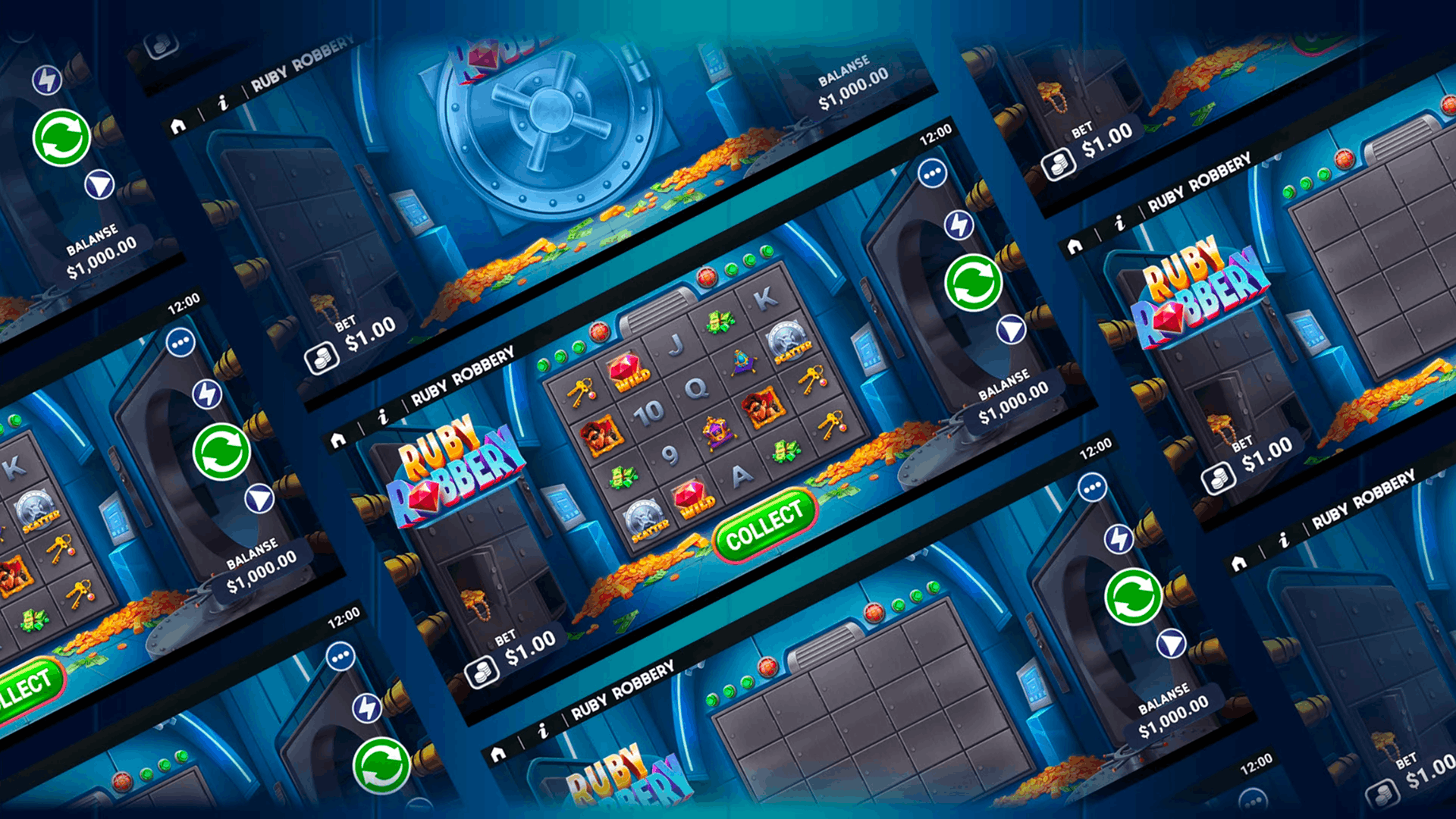
Our own slots include Bank Wagon Heist, Cheshire’s Luck, Hook the Fortune, Yellow Slotmarine, Ruby Robbery, Money Bunny Show, Pirate Coins, and Catch the Luck.
Who we work with. In iGaming, we have worked with Aristocrat, Relax Gaming, and Yggdrasil. Outside iGaming, we have worked with Electronic Arts and Disney, and our wider game art production covers casual and mobile projects.
You can browse our full portfolio or our art on Behance.
Frequently Asked Questions
What should I look for in a slot game art company?
A slot-specific portfolio of shipped titles, full-cycle capability from concept to animation, a clear view of who will work on your project, experience at scale, a defined art direction process, and production-ready handoff with layered files and reusable rigs.
How much does slot game art cost?
A complete symbol set typically costs $8,000 to $25,000. Full-cycle art for a feature-rich slot, covering concept, symbols, backgrounds, UI, and character animation, typically costs $25,000 to $100,000+. A reskin of an existing slot typically runs $10,000 to $30,000.
How long does slot game art production take?
A symbol set typically takes 3 to 6 weeks. Full art production for a complete slot, from concept through animation-ready delivery, typically takes 12 to 20 weeks. A phased schedule helps keep art aligned with development.
What is the difference between a slot game art studio and a general game art agency?
A slot art studio understands the constraints specific to casino games: symbol legibility at small sizes, payline visibility, animation frame budgets, reel proportions, and operator theme conventions. A general agency can produce attractive art that still fails these technical requirements.
Can I hire individual slot game artists, or do I need a studio?
You can, but most individual artists specialize in one layer, such as characters, backgrounds, or animation. Covering a full slot with several freelancers means managing their coordination, version control, and visual consistency yourself. For production-quality output on a commercial timeline, a full-service studio is usually the more reliable choice.
What art styles can a slot art studio produce?
Experienced slot art studios work across illustrative 2D, flat and geometric design, 2.5D and 3D-rendered symbols, cartoon and character-driven themes, and culturally specific styles such as East Asian, Egyptian, or Aztec. Our own portfolio ranges from cartoon comedy to detailed mythology.
Does Twin Win Games work with international clients?
Yes. We work with 198+ clients worldwide, with a process built for remote collaboration, milestone-based delivery, and clear asset handoff across time zones.
Ready to Start Your Slot Art Project?
Tell us about your game, and we will come back with a detailed scope and timeline.