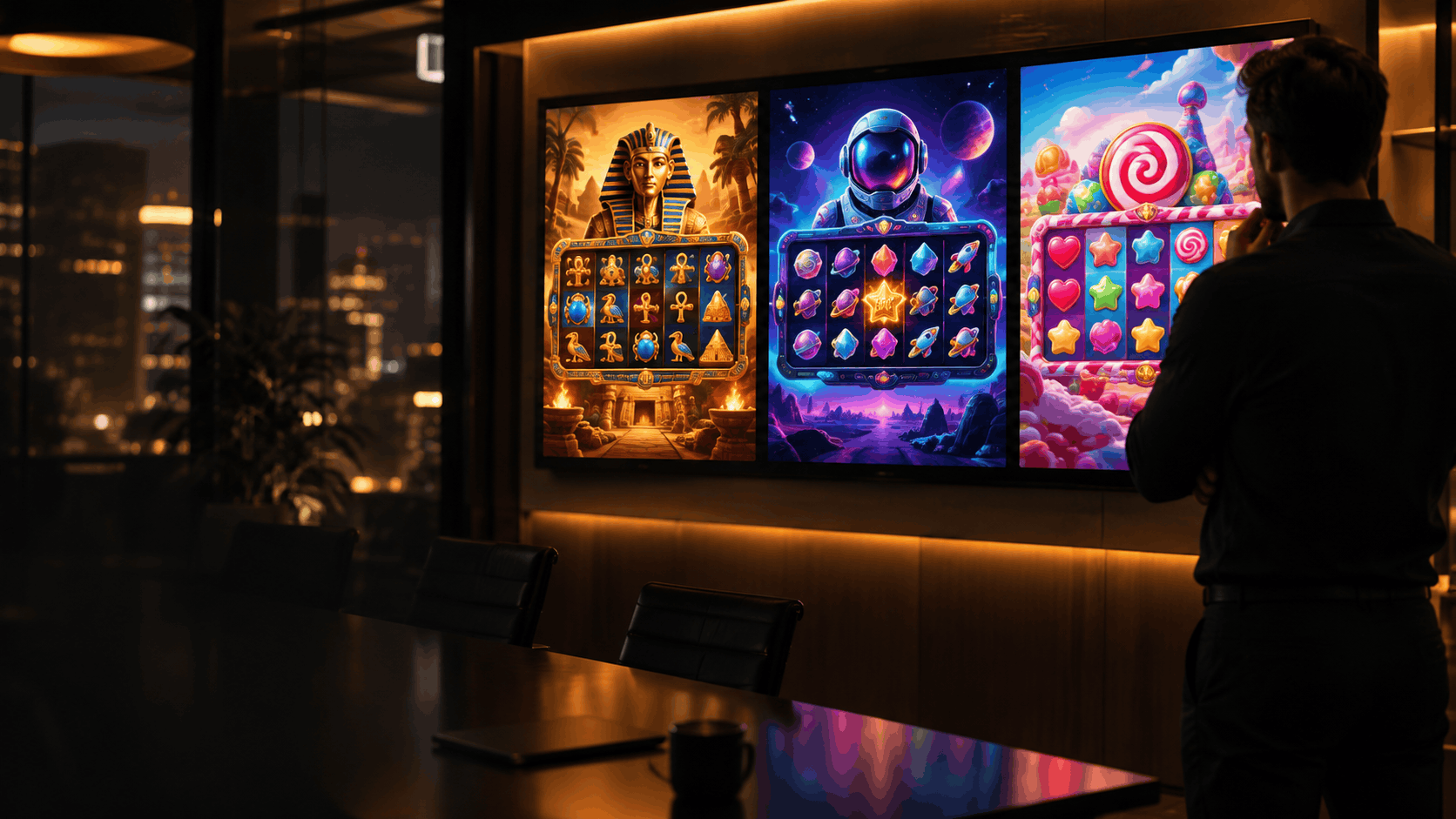

The video game industry is experiencing a real boom. Over the past few years, the market has grown to 200+ billion dollars, and that’s just the beginning. If you’re looking for a partner to create a game, whether it’s a mobile arcade or an ambitious AAA adventure, choosing the right company can be the key to your project’s success.
In this article, we’ll look at the Top video game development companies that deserve your attention in 2026. You’ll learn what to look for when choosing a partner and get acquainted with industry leaders who create world-class games.
Key Factors to Evaluate in a Game Development Companies
Choosing game developer companies is like picking a team for an Everest expedition. You can have the best game idea, but without the right people, it’ll remain just an idea. Here are a few criteria worth considering.
Portfolio and Past Projects
A portfolio is a studio’s DNA. It shows not only technical capabilities but also the team’s way of thinking. When reviewing a portfolio, pay attention to more than just pretty pictures.
Look at project diversity. A studio that’s made shooters, puzzles, and simulators usually has a broader technical arsenal. But if you need a mobile game, it’s better to choose those who specialize specifically in mobile gaming.
Check player reviews on released games. Go to Steam, App Store, or Google Play. A rating of 4+ stars and positive comments are good signs. It’s especially interesting to read negative reviews: how did the studio respond to criticism? Did they fix bugs?
Interesting fact: some best game developer companies deliberately leave their early, imperfect projects in their portfolio. It shows honesty and the evolution of their skills.
Technical Expertise and Technology Stack
Game technology changes quickly, so a studio’s stack tells you how current it is.
Unity or Unreal Engine is the most common choice for many projects. Unity suits mobile and indie games and moves quickly. Unreal Engine suits visually demanding projects. Browser-delivered games are a different case: real-money slots, for example, run on HTML5, as our guide to Unity versus HTML5 for slot development explains.
Ask about optimization. A game can look excellent on a developer’s powerful machine and stutter on the devices players actually use. Experience with performance on mid-range hardware matters more than a long list of technologies.
Team Experience and Skills
The team is the heart of any studio. You can have the best technologies, but without talented people, they’re useless.
Average team experience matters. But don’t think that 20 years of experience automatically means quality. The industry changes so quickly that experience from 15 years ago might be less valuable than fresh knowledge of current trends.
Check the team structure. Strong Top game development companies have more than just programmers and artists. They employ game designers (who think through mechanics), narrative designers (writers), sound designers, QA engineers (testers), and data analysts.
Interesting feature: many successful studios have game designers on their team who actively play modern games. It’s like a chef who regularly visits other restaurants — they know what’s currently relevant.
Development Process and Methodologies
The development process determines whether your project will be completed on time and within budget. It’s not the sexiest part of game dev, but one of the most important.
Agile and Scrum are industry standards. These methodologies allow flexible responses to changes. Instead of developing a game for a year and then discovering the gameplay doesn’t work, you get regular builds for testing.
Ask about communication. How often will there be meetings? What reporting format? Will you see progress regularly? Best video game developer companies usually offer weekly or bi-weekly demo sessions.
It’s important to understand the testing process. QA (Quality Assurance) isn’t just “playing the game before release.” It’s systematic testing on different devices, finding edge cases, checking balance.
Milestone-based payment is a smart approach. You pay for specific development stages, not handing over all the money at once. This protects both sides.
Client Communication and Support
Game dev isn’t like ordering pizza. It’s months or even years of collaboration, so communication is critically important.
Ask about time zones. If the studio is on another continent, time zone differences can complicate communication. Although many Top gaming companies in USA work with international clients and have flexible schedules.
Do they have a dedicated project manager? This is the person who will be your main contact, coordinate the team, and answer questions. Without a clear point of contact, you can get lost in the chaos of development.
Check their responsiveness. Send them an email with questions. If they respond within 24-48 hours — good sign. If they’re silent for a week — that’s a red flag.
Budget and Pricing Models
Money is a delicate topic, but it’s important to discuss it openly from the start.
Fixed price vs Time & Material. Fixed price — you pay a fixed amount for the entire project. Good for clearly defined tasks. Time & Material — you pay for hours worked. Better for projects where scope might change.
Realistic estimates are key to success. If one studio says “$50K for 3 months” and another says “$150K for 6 months” for the same project — don’t automatically choose the cheaper one. Perhaps the second company has a more realistic view of the task’s complexity.
Ask about hidden costs. Are these included in the price: assets (3D models, music, sounds)? Publishing in stores? Post-release support? Marketing materials?
Interesting fact: many video game development companies offer revenue share models for indie developers. They take less payment now in exchange for a percentage of future game sales.
Post-Launch Support
A game’s release isn’t the end but the beginning of a new phase. Even the most tested games have bugs after launch.
Ask about the warranty period. Many studios offer 1-3 months of free critical bug fixes after release.
Updates and patches — modern games are living organisms. They need updates, new content, balance adjustments. Can the studio support the game long-term? What are the terms?
Analytics integration is important. After release, you need to understand how players interact with the game. Which levels are hardest? Where do people spend money? Where do they drop off? Good companies integrate analytics and help interpret the data.
Community management — if you plan to build a community around the game, some Top game development studios offer social media support, forums, and Discord servers.
Expert Insights: How to Choose the Right Partner
Before exploring the top companies, learn what truly separates a reliable partner from a task-taker. Natalia Makarova, CEO of Twin Win Games with over a decade in iGaming, shares critical insights on evaluating potential partners beyond their portfolio.
In this expert interview, discover:
- How to define your goals before contacting vendors
- Why team structure and clear roles are non-negotiable
- Key questions that reveal real expertise versus sales talk
- Red flags to watch for in initial conversations
- What distinguishes strategic partners from order-takers
Now let’s explore the companies setting industry standards in 2026.
Best Video Game Development Companies
These companies define the games industry. Most of them build their own games and do not take on external development, so they matter here as benchmarks for quality more than as potential partners.
Epic Games
Epic Games created Fortnite and Unreal Engine. Unreal Engine powers everything from AAA blockbusters to indie projects, and its royalty model, free until a game passes a revenue threshold, made high-end technology widely accessible. Fortnite set the template for games as a service: constant updates, seasonal content, cross-platform play, and in-game events.
Epic also funds independent studios through Epic Games Publishing, which finances development in exchange for a revenue share while developers keep their IP. For most projects, though, Epic works as a technology provider and publisher. It does not take on development for hire.
Valve
Valve created Half-Life, Portal, Counter-Strike, and Dota 2, and runs Steam, the largest digital distribution platform for PC games. Its Source 2 engine powers Dota 2, Half-Life: Alyx, and Counter-Strike 2.
Valve is known for an unusually flat structure, with employees choosing their own projects. It rarely works with external clients on development. For developers, Steam matters far more as a distribution channel.
Iron Galaxy Studios
Iron Galaxy, founded in 2008, specializes in porting games between platforms, adapting a game built for one platform, such as PC, to others such as consoles. Every platform has its own limits, which makes porting harder than it looks.
The studio also makes its own games, most notably the Killer Instinct revival for Xbox and PC. Unlike most names on this list, Iron Galaxy does take on external work, which makes it a genuine option for teams that need a game ported.
Ubisoft
Ubisoft created franchises that nearly every player knows: Assassin’s Creed, Far Cry, Tom Clancy’s Rainbow Six, and Just Dance. Ubisoft Connect ties its games together with shared rewards and cross-progression. Its focus is its own large franchises, so it is rarely an option for external projects.
Riot Games
Riot Games built its business on League of Legends, which launched in 2009 and remains one of the most played games in the world. Riot helped turn competitive gaming into a global esports industry, and its free-to-play model earns revenue from cosmetic items that give no gameplay advantage. Riot does not do contract development.
Bungie
Bungie created two of the most influential shooters in history, Halo and Destiny, and is known for exceptionally refined gunplay. Sony acquired Bungie in 2022 for $3.6 billion, and has since brought parts of the studio into its own organization. Bungie builds its own projects and does not take on contract development.
Respawn Entertainment
Respawn, founded in 2010 and owned by Electronic Arts, made its biggest mark with Apex Legends. The game launched in 2019 with no advance marketing and reached 25 million players in its first week. Respawn focuses on its own franchises.
Activision Blizzard
Activision Blizzard formed in 2008 and was acquired by Microsoft in 2023. Its franchises, including World of Warcraft, Overwatch, Diablo, StarCraft, Call of Duty, and Hearthstone, each defined a genre. Its scale and focus on its own franchises put it out of reach for external projects.
Rockstar Games
Rockstar is known for vast, detailed open worlds. Red Dead Redemption 2 may be the most detailed open world ever made, the product of years of development and thousands of people. Grand Theft Auto VI, announced in December 2023, is among the most anticipated releases in the industry. Rockstar works only on its own projects.
Where Twin Win Games Fits
If most industry leaders do not take outside work, the practical question is who does. That is where studios like ours come in.
Twin Win Games was founded in 2013 by twin sisters Natalia and Tatiana Makarova, each with more than 20 years in game development. Over 13+ years we have released 1,000+ games for 198+ clients worldwide, with a team of 110+ specialists, 90% of them mid and senior level.
We specialize in casino and slot games, alongside casual and mobile titles and game art production.
Casino and slot games
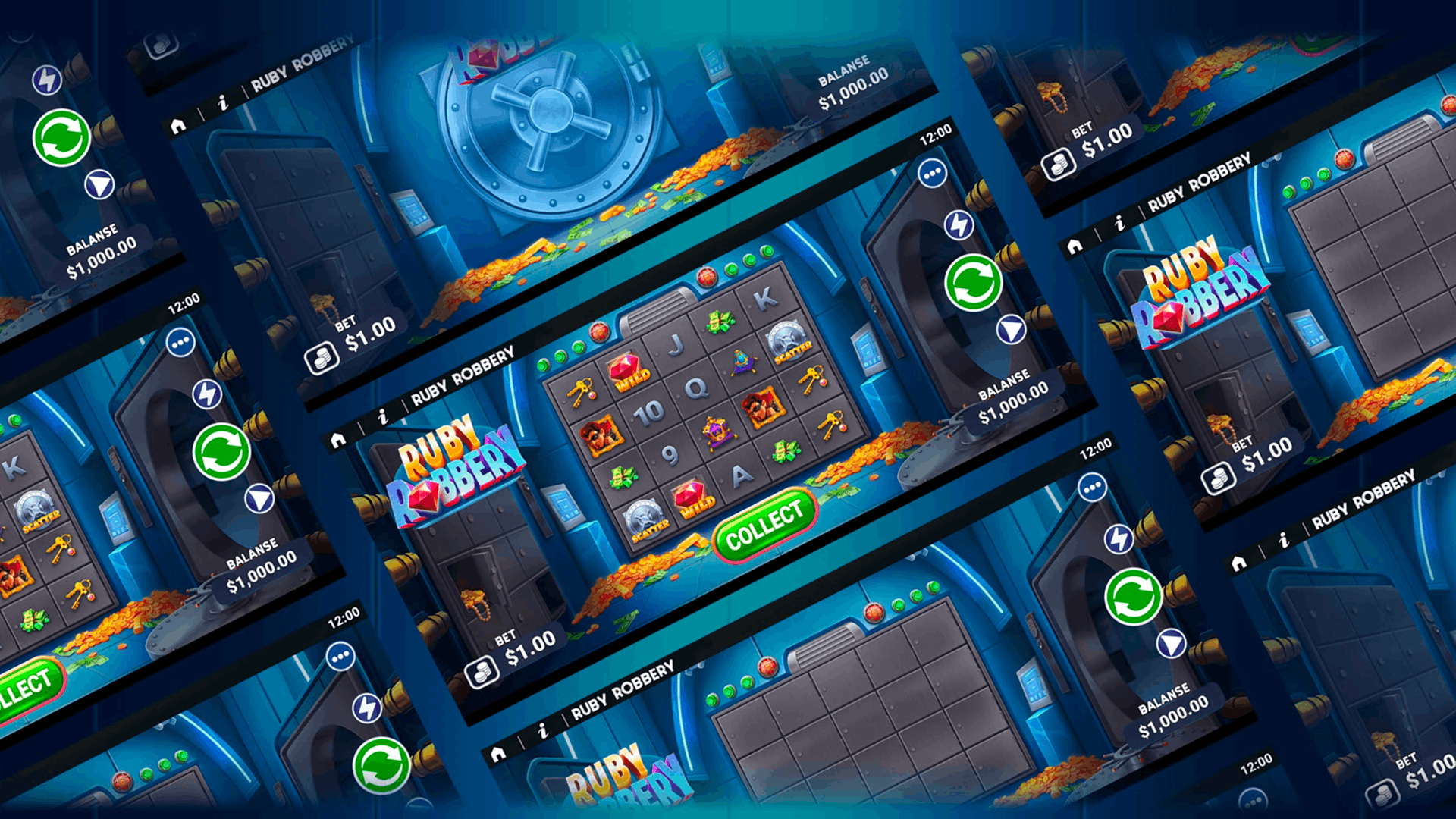
Our own slot portfolio includes Money Bunny Show, Yellow Slotmarine, Ruby Robbery, Hook the Fortune, Bank Wagon Heist, Cheshire’s Luck, Pirate Coins, and Catch the Luck.
We build slots on HTML5 with our own proprietary PixiJS-based engine, and run our own remote game server, with titles certified for the UK, Malta, Latvia, and Portugal. Our slot game math team designs paytables and bonus features, and validates every RTP version across a minimum of one billion simulated rounds before a game goes to a testing laboratory.
In iGaming, we have worked with Aristocrat, Relax Gaming, and Yggdrasil. Our partnership with Luck Genome Ltd ran for more than three years, with a dedicated team of 15 to 20 people producing casino content throughout.
Beyond casino
Outside iGaming, we have worked with Electronic Arts and Disney, and we take on custom game development and game art production for casual and mobile projects. Our art portfolio is on Behance.
Why studios work with us
Focused attention. We work with a limited number of clients at a time, so each project gets the team’s full attention.
Flexibility. We adapt quickly when features or direction change, without the approval chains of a large corporation.
Openness to new ideas. We are interested in distinctive concepts, including ones that do not follow a proven formula.
Explore our complete portfolio, or see our slot game development services.
Conclusion
Choosing a game development company comes down to technical capability, team experience, and how the studio works with clients.
The industry leaders set the standard for quality and innovation, but most of them build only their own games. For a studio or operator looking for a partner, the real choice is among the companies that take on external projects and specialize in the kind of game you want to build.
Frequently Asked Questions
How do I choose the right game development company for my project?
Look at the portfolio, technical skills, team structure, development process, communication, and budget. Read player reviews of released games, check which technologies the studio uses, and confirm it has experience with the type of game you want to build.
Do the biggest game studios take on external projects?
Mostly not. Companies such as Riot, Rockstar, Bungie, Respawn, and Activision Blizzard focus on their own franchises. Some specialists, such as Iron Galaxy for porting, do take outside work, and most external development goes to studios that offer development as a service.
Why should I choose Twin Win Games?
We specialize in casino and slot games, as well as casual and mobile titles and game art. With 13+ years in game development and 1,000+ released games, we offer focused attention, flexibility, and a team that works as a partner in shaping the product.
Does Twin Win Games provide post-launch support and updates?
Yes. We provide post-release support, fix critical bugs, ship updates and new content, and integrate analytics so you can see how players interact with the game.
What makes Twin Win Games specialists in casino and slot games?
We build slots on HTML5 with our own proprietary engine, run our own remote game server, and have titles certified for the UK, Malta, Latvia, and Portugal. Our math team validates every RTP version across a minimum of one billion simulated rounds. In iGaming we have worked with Aristocrat, Relax Gaming, and Yggdrasil.
Can Twin Win Games handle both small projects and large-scale production?
Yes. We work with startups and indie studios on single titles, and provide dedicated teams for ongoing production. Our partnership with Luck Genome Ltd, for example, ran for more than three years with a team of 15 to 20 people.