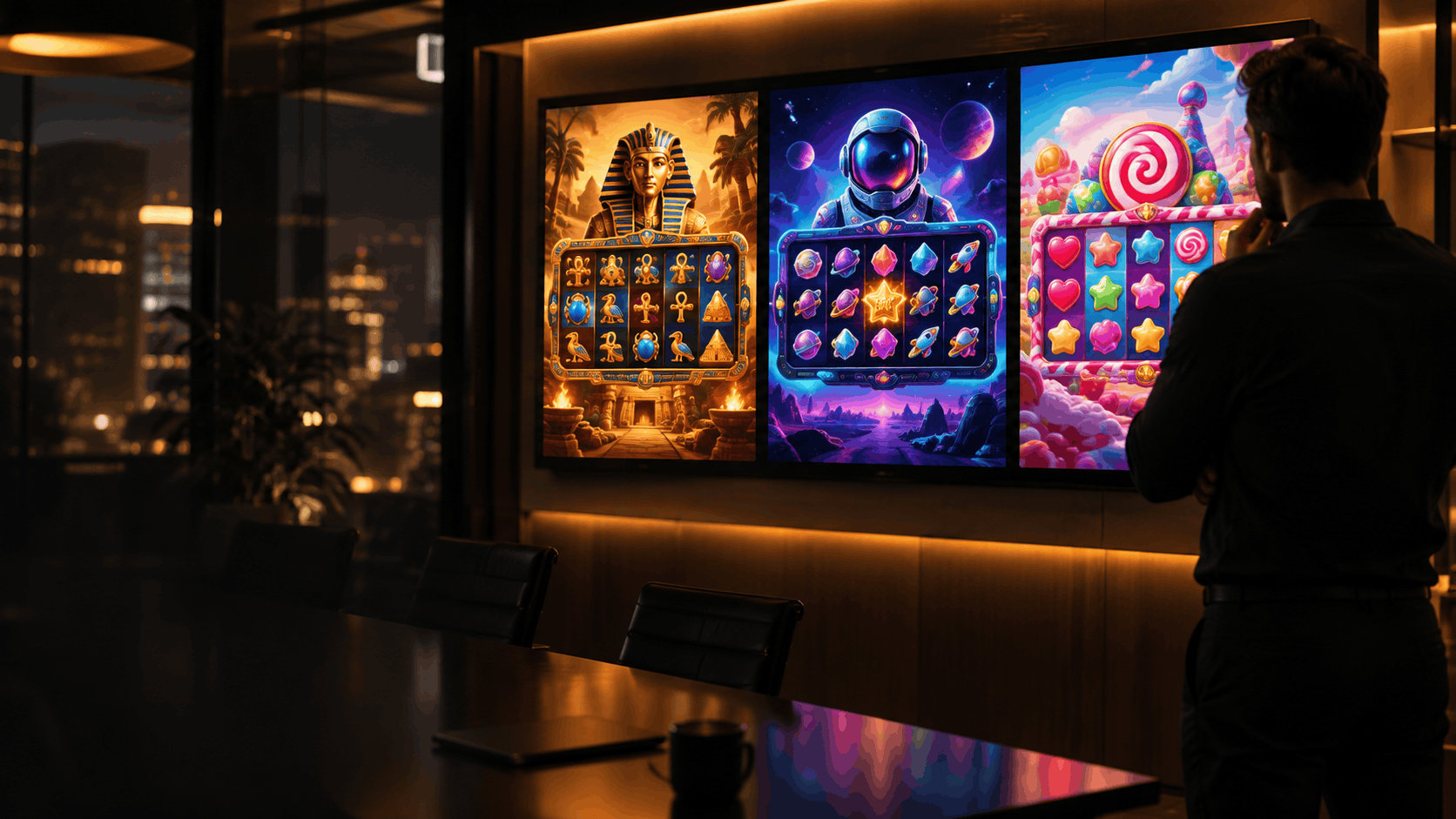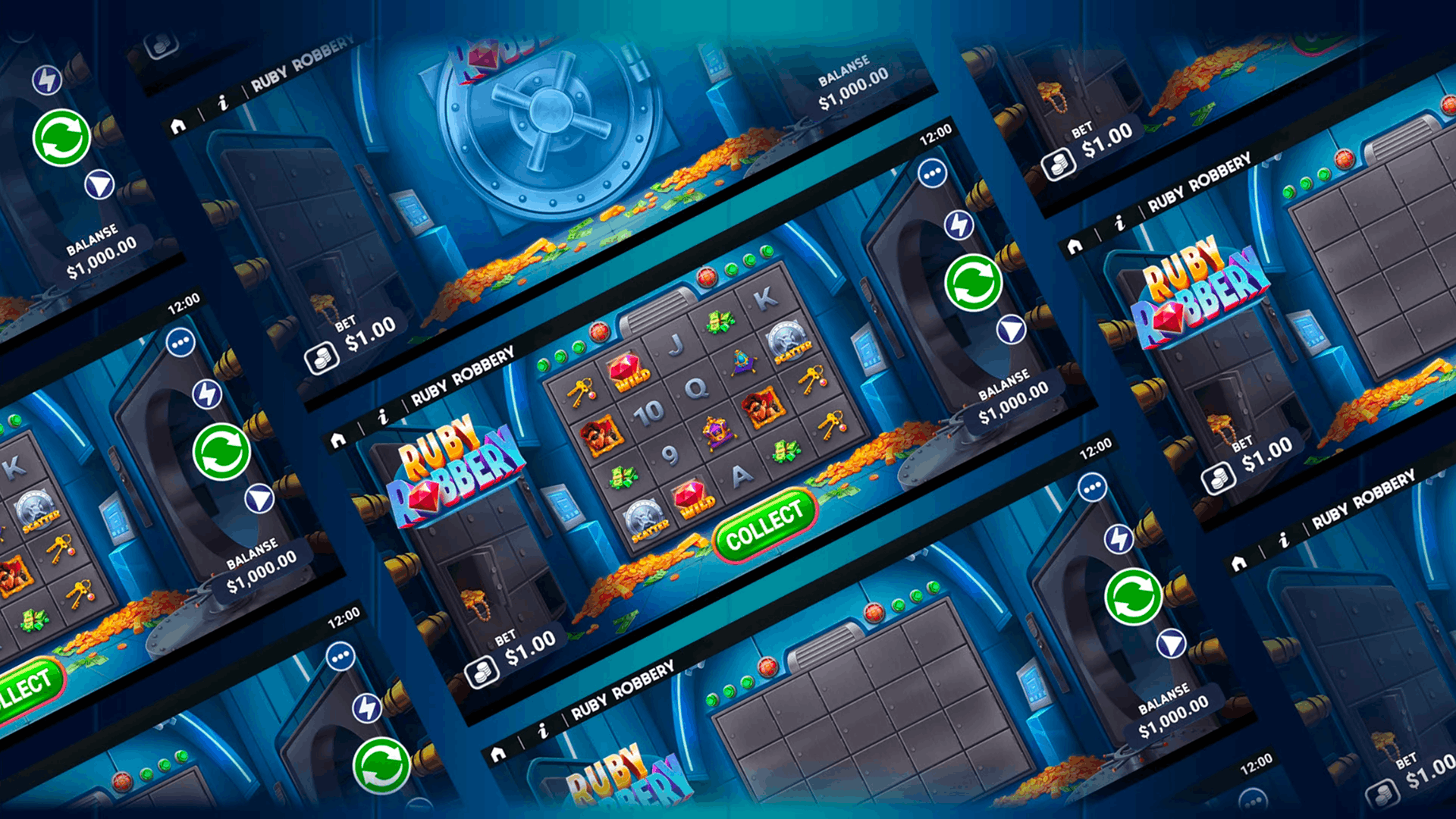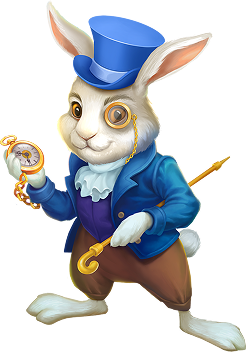
Video game character design combines artistry, psychology, and technical constraint. A good character reads instantly, carries a story, and holds together across every state the game puts it in, from an idle pose to a victory moment.
This guide covers the principles that apply to any game character, then looks at where they get tested hardest: stylized characters for casino and mobile games, which have to stay recognizable at a fraction of the size they were drawn at, often while in motion.
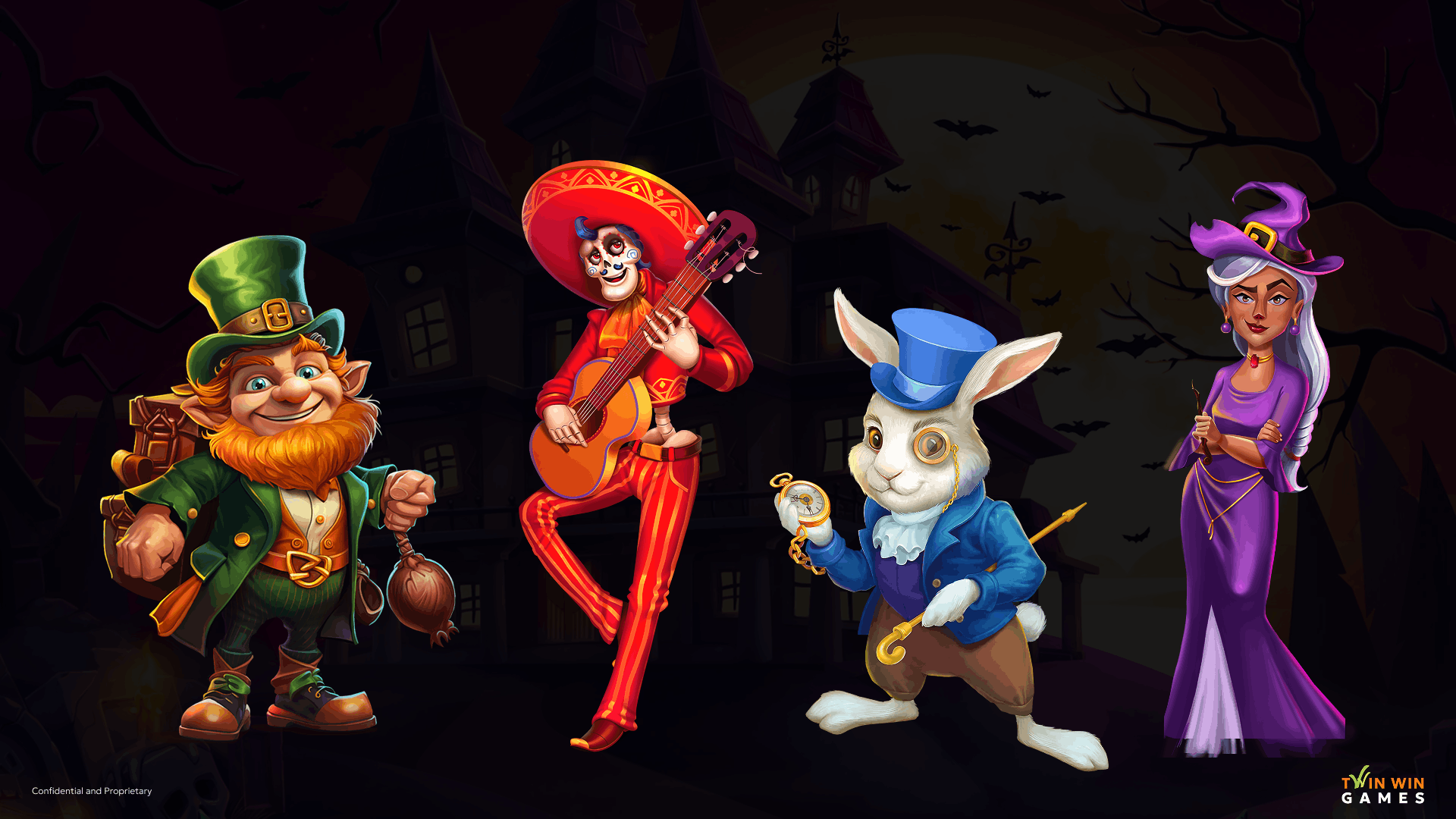
What Is Video Game Character Design?
Video game character design is the craft of conceptualizing, drawing or modeling, and animating the characters that inhabit a game. Every character serves a purpose: narrative, gameplay, or visual identity, and usually all three.
A well-designed character does three jobs at once:
- Communicates its role before the player reads a word about it.
- Drives engagement through appeal, relatability, or intrigue.
- Fits the world it lives in, so the game feels coherent.
The Fundamentals of Character Design
Memorable characters share a small set of qualities, whatever the art style or platform.
A readable silhouette. If a character is unrecognizable as a solid black shape, it will be hard to recognize in play. Silhouette is the first thing the eye processes and the last thing that survives at small sizes or in fast motion.
Uniqueness. Distinctive shapes, gestures, and costume details make a character instantly identifiable and set it apart from similar archetypes.
Relatability. Players connect with characters who show traits they recognize in themselves, or traits they aspire to.
Consistency across states. A character has to remain the same character when idle, moving, celebrating, or reacting. Proportions and facial features that drift between poses break the illusion quickly.
Visual Appeal: Shape, Color, and Silhouette
Striking visuals win attention. Functional design keeps it.
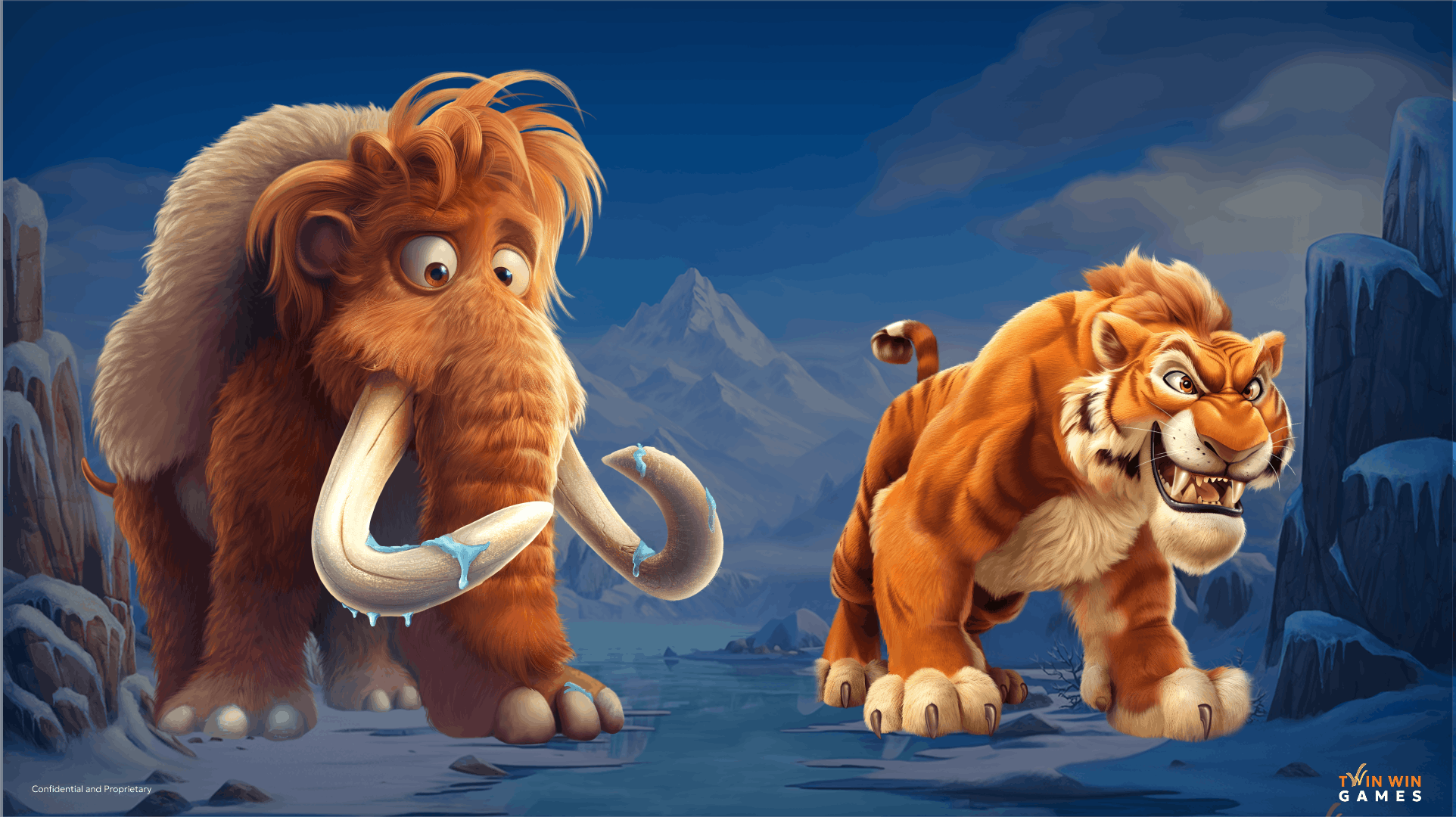
Shape language. Shapes carry meaning before detail does. Rounded forms read as friendly and approachable, sharp angles as dangerous or aggressive, and heavy squared forms as strong and stable.
The pair below shows it clearly. The mammoth is built from soft, heavy curves and reads as gentle despite its size. The sabertooth is all points and angles, and reads as a threat before it moves. Same art style, same world, opposite personalities, carried almost entirely by shape. Both characters come from our 2D slot game art and animation case study.
Color. Colors carry emotion and signal traits: red for aggression or energy, blue for calm, green for nature or growth. A limited palette of two or three dominant colors reads faster than a complex one.
Silhouette clarity. A clear outline keeps a character identifiable at a distance, in low light, or against a busy background.
Understanding Your Audience
Character design should reflect who the game is for.
- Casual and mobile players respond to bright, approachable, instantly readable designs.
- Core and competitive players often expect more detail, edge, and visual complexity.
- Global audiences need designs that are culturally aware, avoiding stereotypes while still drawing on recognizable themes.
Themed characters are especially common in casino and mobile games, where a fortune god, a leprechaun, or a pirate captain signals the entire premise of the game in one image. Getting that cultural shorthand right, without sliding into caricature, is a real skill.
Creating Compelling Heroes
A successful hero balances relatability with aspiration.
Strengths and flaws. Nathan Drake from Uncharted works because his skill and charisma sit alongside self-doubt. A hero with no weaknesses has nowhere to grow.
Progression. Players should see the hero change, through new abilities, emotional development, or a visible shift in appearance over the course of the game.
Technical readiness. Heroes appear in more states than any other character, so they need clean rigging, a full range of animation, and assets that can change dynamically, such as weapons, tools, or costumes.
Designing Iconic Villains
A memorable villain matters as much as the hero.
Complexity. The strongest villains have motivations the player can understand, even if not agree with. Magneto is compelling because his belief in mutant superiority grows out of real history and real pain.
Contrast. A villain should oppose the hero visually as well as narratively. If the hero is warm and rounded, the villain can be cold and angular.
Mood. Darker palettes, asymmetry, and unsettling proportions all build menace. Glowing eyes, smoke, or particle effects add impact in motion.
Supporting Characters
Supporting characters enrich a game without competing with its lead.
- Gameplay role. Sidekicks provide hints, backup in combat, or comic relief.
- Visual cohesion. Supporting characters should clearly belong to the same world as the hero, while staying distinct enough to avoid confusion.
- Behavior. Well-designed NPC reactions give even minor characters a sense of personality.
Character Design for Casino and Mobile Games
Most character design advice assumes a large character on a large screen. Casino and mobile games break that assumption, and the constraints change what good design means.
Designing for symbol size
In slot games, characters often double as high-value symbols. They appear inside a reel cell, a fraction of the size they were drawn at, frequently while the reels are still moving.
The test is whether a player can identify the character instantly at that size. Detail that looks impressive at full resolution turns to noise, and only the silhouette, the dominant colors, and one strong identifying trait survive.
A practical check: view the character at actual symbol size, in grayscale, next to every other symbol in the set. If it becomes hard to distinguish from its neighbors, it will be misread in play.
Expression and pose sheets
A casino character rarely appears in a single pose. It sits idle on the reels, reacts to a win, celebrates a big win, and often hosts a bonus round.
The emperor below shows what that takes in practice. The brief behind our mythology slot game art and animation case study called for one central hero character able to carry multiple gameplay states, bonus sequences, and jackpot celebrations. He is a 2.5D character, with the depth and lighting of 3D artwork delivered as 2D assets, which keeps him expressive while staying light enough to perform smoothly across web and land-based platforms.
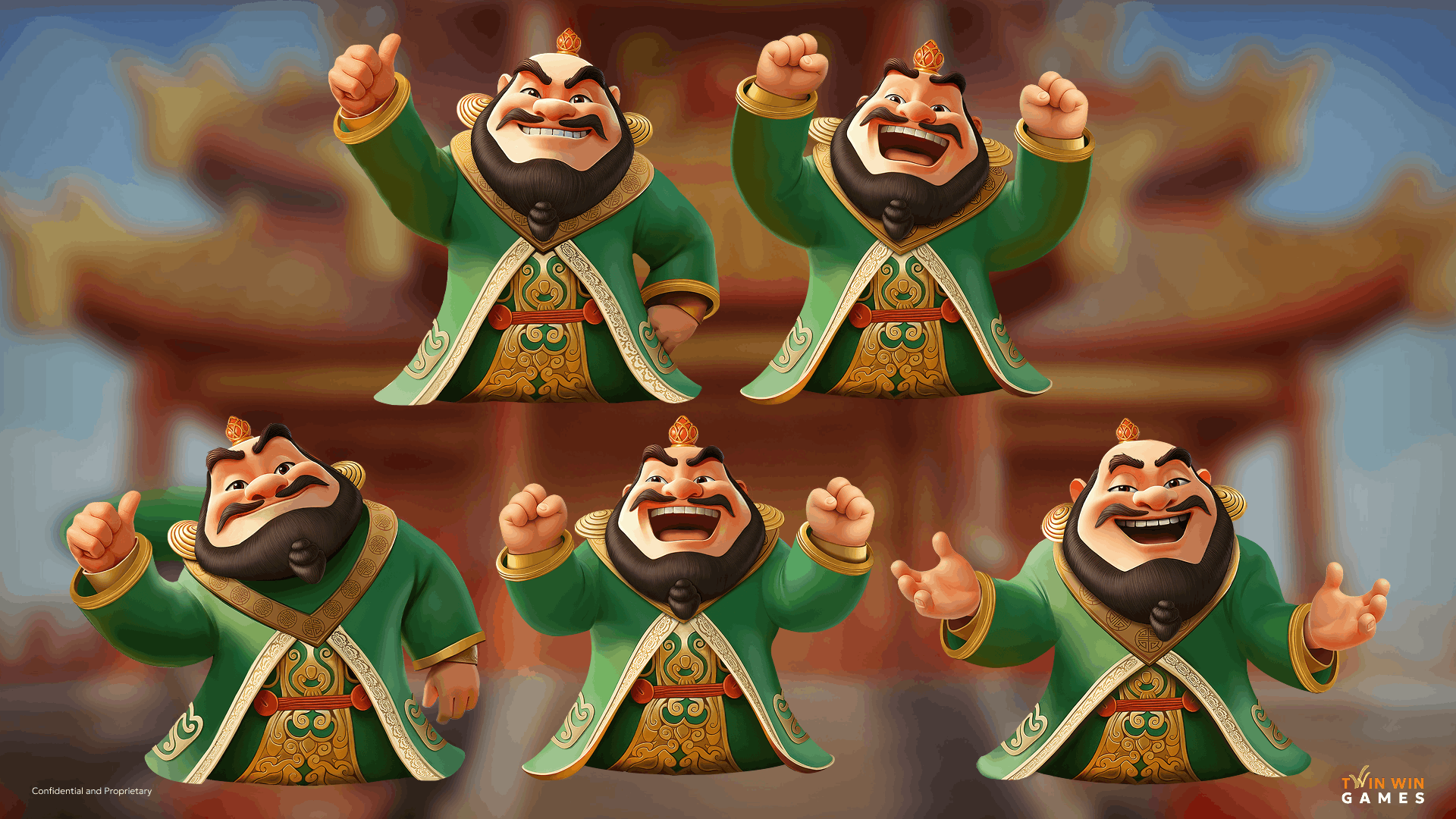
That means designing the character as a set from the start. A character drawn once, then redrawn for each new state, drifts: the face changes slightly, the proportions shift, and the set stops feeling like one personality. Planning every expression before production begins keeps the character consistent across the whole game.
Palette discipline inside a symbol set
A character never appears alone. It sits in a set of symbols that all compete for attention at the same small size. Its palette has to be distinct from every neighboring symbol, and it has to hold up against every background the game uses.
Building characters for reskins
Successful casino games are often re-themed for new markets or seasons. A character built with a clean, reusable rig can carry a completely new design onto the same skeleton, which makes a reskin far faster and cheaper. A character baked into flattened artwork has to be redrawn and re-animated from scratch.
Our slot game art team builds characters with that reuse in mind, so a proven game can be given a new identity through a slot game reskin without rebuilding its cast.
For a wider look at how characters fit into the rest of a game’s visual pipeline, see our practical guide to 2D game art.
Tools and Technologies in Character Design
The right tools depend on the art style and the platform.
2D and stylized characters
- Photoshop and Illustrator for concept work and final artwork.
- Procreate for sketching and early exploration.
- Spine for skeletal animation, the standard for stylized 2D characters in casino and mobile games.
3D and realistic characters
- ZBrush for detailed sculpting.
- Blender as a versatile, open-source modeling and animation suite.
- Maya for advanced rigging and animation.
- Substance Painter for textures and materials.
Game engines
- Unreal Engine 5 for real-time character testing with high-fidelity lighting.
- Unity for a wide range of 2D and 3D projects.
AI-assisted tools can speed up early iteration, but they work best as a starting point for artists. A production character still needs a designer who understands readability, consistency, and the technical requirements of the game.
The Iterative Design Process
Character design runs in cycles. Each pass refines the character based on what the last one revealed.
- Research and brainstorming. Study the audience, the genre, and existing archetypes, and build mood boards for direction.
- Sketching and concept art. Start loose, explore variations, and narrow toward a direction through feedback.
- Refinement. Lock proportions, palette, and key identifying features.
- Production. Build final artwork, the full set of expressions, and the rig.
- Testing. Check the character in context, at real size, in motion, and against the actual backgrounds it will appear on.
Collaboration Across Disciplines
Cohesive characters come from teams that work together.
- Writers define backstory and personality.
- Artists give the character its look.
- Animators bring its movement to life, through game animation and rigging.
- Developers integrate it into gameplay and keep it performing on target devices.
When these teams sit in one pipeline, the character is designed with its technical integration in mind from the start, which avoids costly rework later.
Challenges in Character Design
Technical limits. Detailed characters strain older or lower-end hardware. In 3D, level-of-detail techniques render simpler versions at a distance. In 2D, optimized texture atlases and efficient rigs keep performance smooth.
Creativity versus function. A beautiful design can still fail if it is too complex to animate, too detailed to read at small size, or too similar to other characters in the game.
Case Studies: Iconic Video Game Characters
Geralt of Rivia, The Witcher. Scars and rugged armor tell the story of a life spent fighting, before he says a word.
Aloy, Horizon Zero Dawn. Tribal aesthetics blended with futuristic elements create a visual identity that is immediately her own.
Sephiroth, Final Fantasy. A towering silhouette and a single-wing motif carry both menace and tragedy.
Each of these reads at a glance. That is the quality every good character shares, whether it is a console hero or a symbol on a slot reel.
Working with a Character Design Studio
For studios and operators commissioning characters, a few things separate a strong partner from an average one:
- Range across styles. Look for a portfolio that covers the styles you need, from realistic to stylized.
- Consistency across states. Ask to see expression and pose sheets, since they reveal whether a team can hold a character together across a full set.
- Production-ready handoff. Characters should arrive layered, rigged, and prepared for integration. Flattened illustrations have to be rebuilt before they can be animated.
- Reskin support. If your game may be re-themed later, the character should be built so its rig and structure can be reused.
Our game art production teams cover the full cycle, from concept and final art to expressions, rigging, and integration.
Frequently Asked Questions
How long does it take to design a video game character?
It depends heavily on the type of character. A AAA 3D hero with full facial rigging and a complete animation set can take three to six months. A stylized 2D character for a casino or mobile game, covering concept, final art, and a set of expressions, typically takes one to three weeks.
What skills are essential for character design?
Artistic fundamentals such as anatomy, color theory, and shape language, technical skills such as rigging and animation, and a strong grasp of how the character will be seen and used in the actual game.
How do indie developers create standout characters?
By committing to a strong, simple concept and a clear silhouette. A distinctive idea executed cleanly usually beats a detailed design that is hard to read. Accessible tools such as Blender and Spine make professional results achievable on a smaller budget.
What software is used for character design?
Photoshop, Illustrator, and Procreate cover 2D concept and final art, with Spine for 2D animation. ZBrush, Blender, and Maya handle 3D sculpting, modeling, and rigging. Blender and Krita are free options that suit beginners.
Why is story integration important?
Characters tied closely to the story deepen immersion and emotional impact. Even in games with little narrative, a character’s design should suggest a personality and a history.
What makes a character iconic?
A clear silhouette, a distinctive visual identity, and a design that matches its role. The most iconic characters are recognizable at a glance, even at small sizes.
Need Characters for Your Game?
Twin Win Games designs characters for casino, mobile, and casual games, from concept and final artwork to expression sets, rigging, and animation. With 13+ years in game development, 1,000+ released titles, and 110+ in-house specialists, our teams build characters that read clearly, stay consistent across every state, and are ready for future reskins.