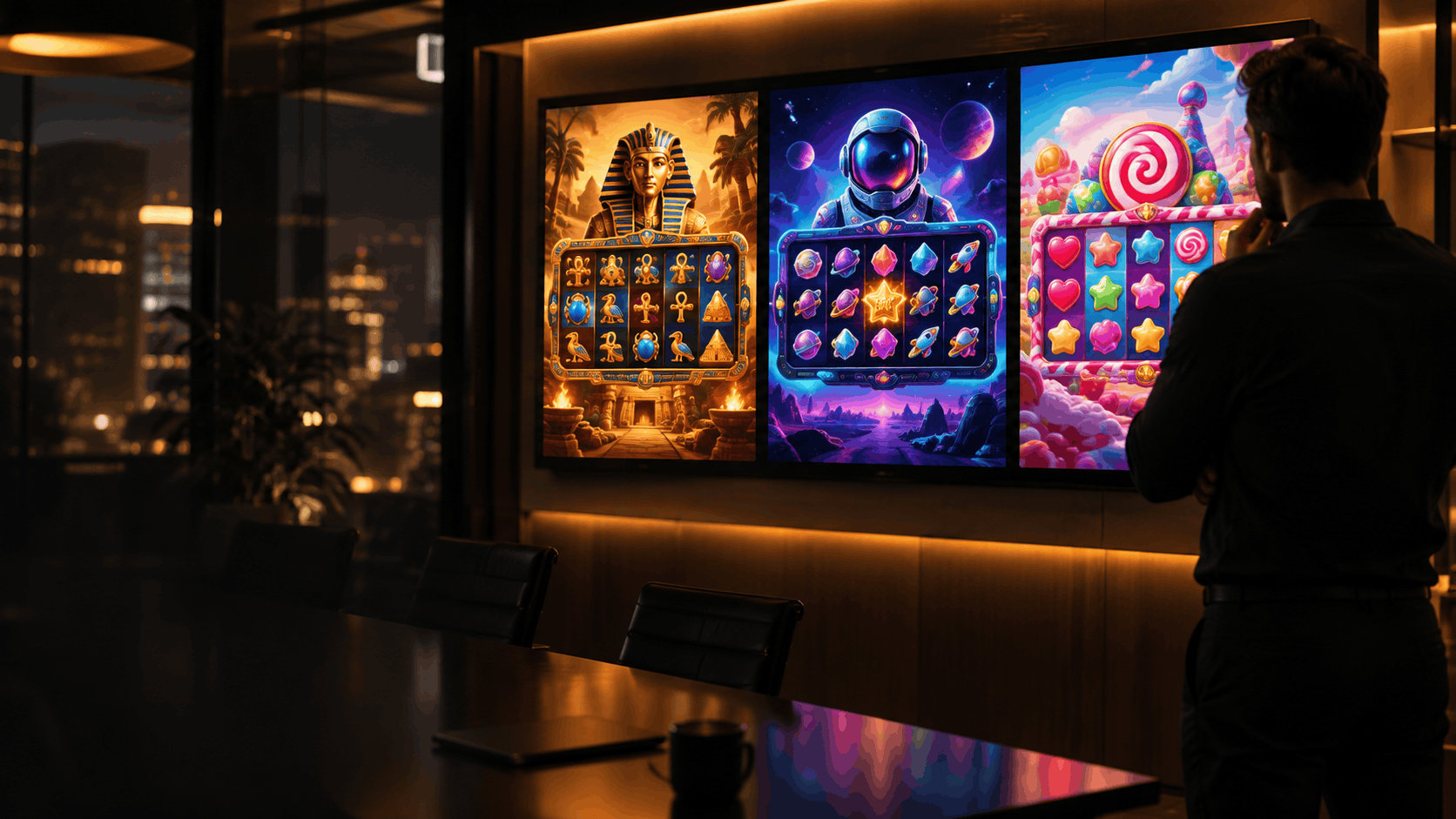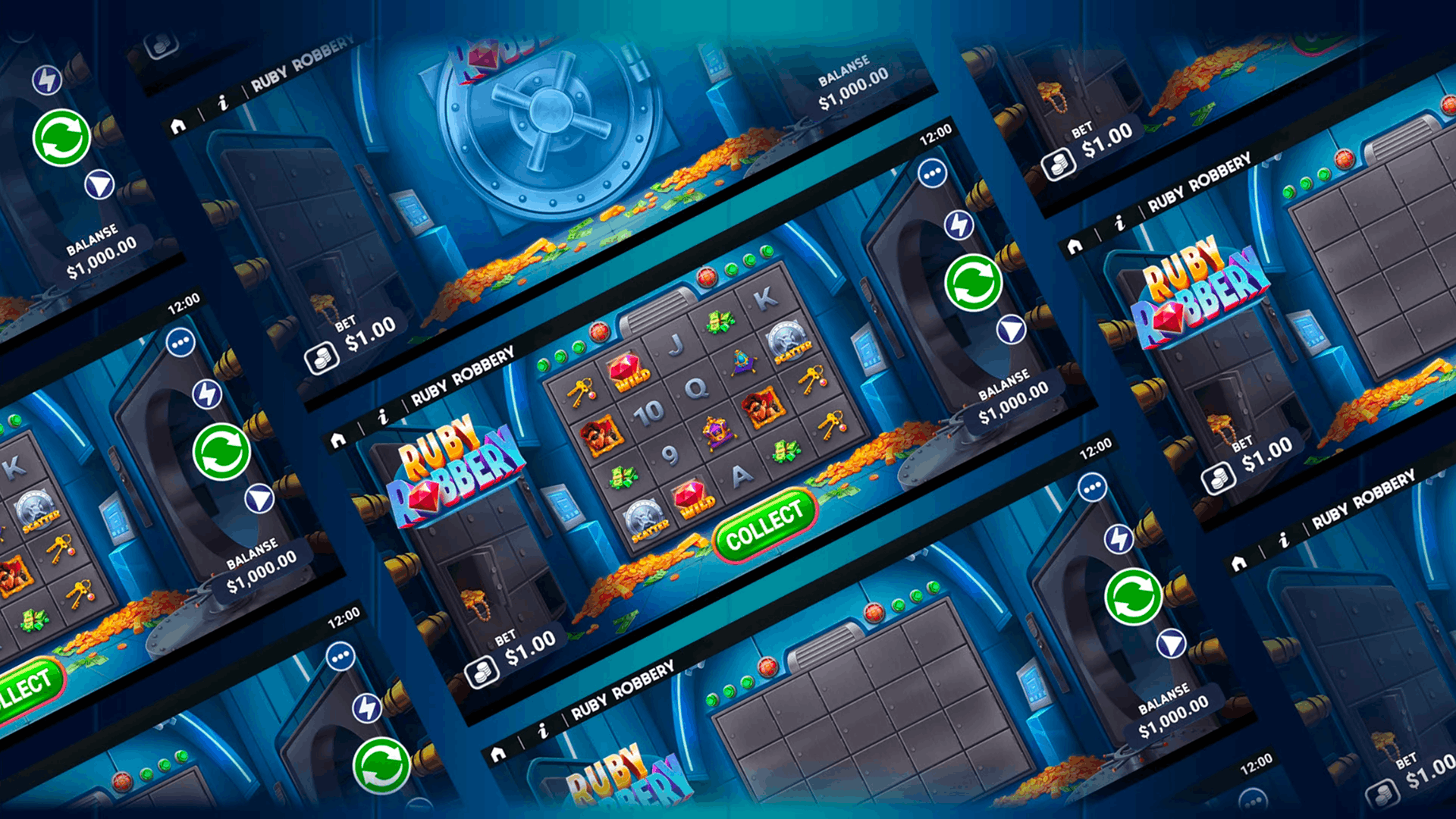

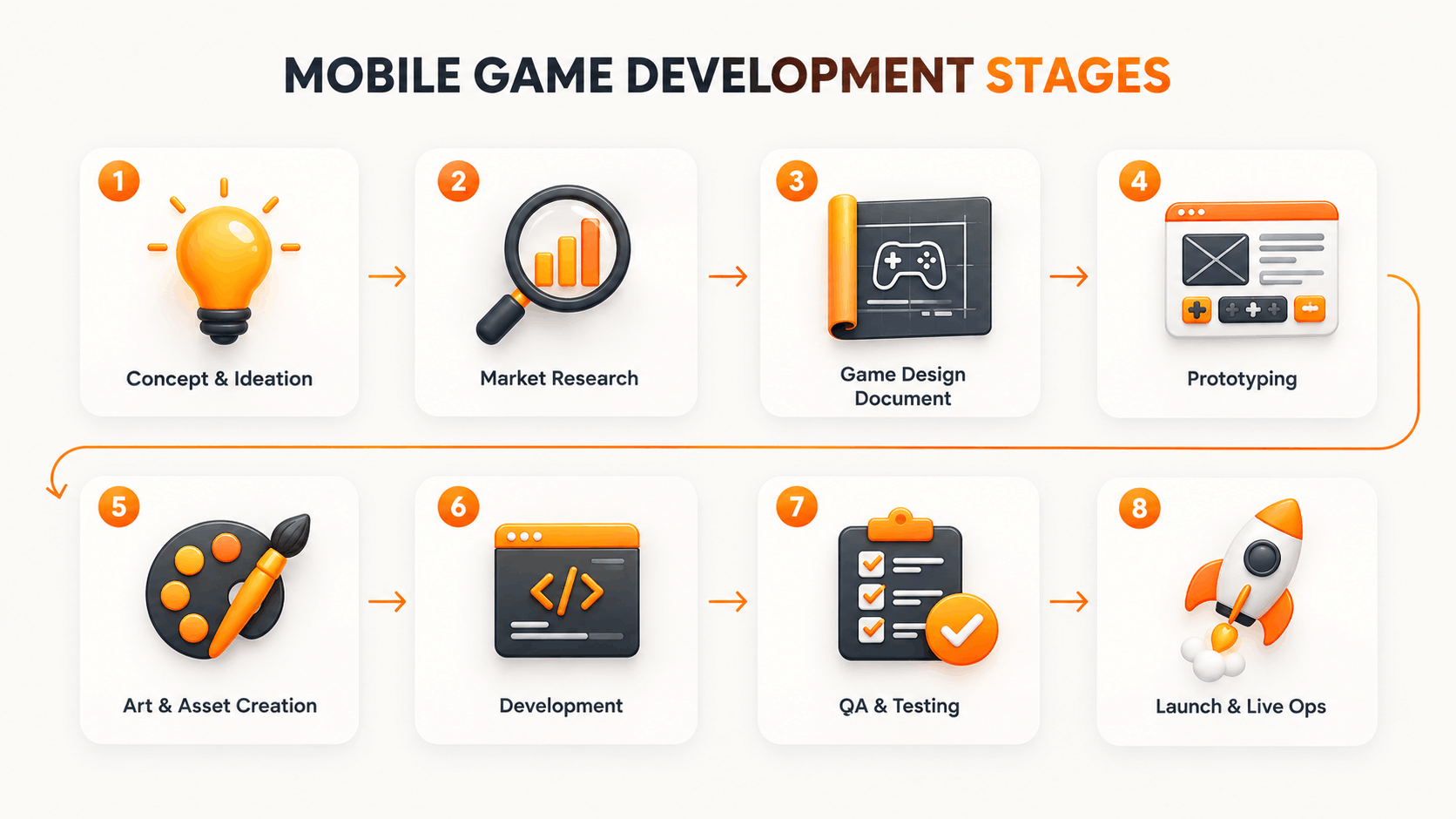
Mobile game development runs through eight stages, from the first concept to live operations after launch. This guide covers what each one has to produce before the next can start, who works on it, how long it typically takes, and the failure mode that shows up most often at each step.
The durations below are typical industry ranges for a mid-sized mobile project. Every project differs, and the scoping section near the end explains what moves them.
The Mobile Games Market in 2026
Market estimates vary depending on how each research firm defines the category. Statista projects worldwide mobile games revenue at $116.85 billion in 2026, growing at a CAGR of 5.48% to $152.61 billion by 2031, with average revenue per user at $70.21. Grand View Research places the market higher, at $176.7 billion in 2026 and $256.2 billion by 2030, at a CAGR of 10.2%.
What matters more is where the growth comes from. Sensor Tower reported 2025 as a third straight year of revenue growth across the App Store and Google Play, with time spent rising slightly while downloads fell.
The market is expanding through lifetime value from existing players. With installs declining, growth depends on retention, reactivation, and monetizing the players a game already has. A game designed to win on install volume is competing in a shrinking pool, and that should shape decisions from Stage 1 onward.
Stage 1. Concept and Ideation
Typical duration: 1 to 2 weeks Who is involved: game designer, producer, art director
This stage defines the game: genre, core mechanic, target audience, and the reason a player would choose it over the thousands of alternatives already in the store.
What it has to produce before the next stage starts: a one-page concept covering the core loop, the target player, the platform, and the monetization model. If any of those four is still open, the following stages will be built on a moving target.
Where it goes wrong: teams fall in love with a theme before they have a mechanic. A strong theme with a weak core loop produces a game that looks appealing in screenshots and loses players in the first session.
Stage 2. Market Research and Competitive Analysis
Typical duration: 1 to 2 weeks, usually running in parallel with Stage 1 Who is involved: producer, game designer, marketing
Research establishes whether the concept has an audience and how crowded that space already is. It covers direct competitors, their monetization, their retention patterns, and the gaps they leave open.
What it has to produce: a positioning decision. Which existing games is this competing with, and on what basis does it win.
Where it goes wrong: research is treated as validation. Teams look for evidence the idea works and skip the evidence that it does not. The useful version of this stage is willing to kill the concept.
Stage 3. Game Design Document
Typical duration: 2 to 4 weeks Who is involved: game designer, technical lead, art director
The GDD is the specification every other stage works from: mechanics, progression, economy, level structure, UI flow, art direction, and technical requirements.
What it has to produce: enough detail that art and engineering can start without asking what something means. A GDD that needs constant interpretation is not finished.
Where it goes wrong: the document describes what the game contains without defining how systems interact. Economy and progression are the usual gaps, and both surface late, when changing them is expensive.
Stage 4. Prototyping
Typical duration: 3 to 6 weeks Who is involved: one or two developers, game designer
A prototype exists to answer one question: is the core loop actually engaging. It uses placeholder art, minimal UI, and no polish.
What it has to produce: a clear yes or no on the core mechanic, backed by people playing it who were not involved in designing it.
Where it goes wrong: the prototype gets polished. Once it looks like a game, the team stops evaluating whether it plays like one, and the honest answer becomes harder to hear. Prototypes should stay ugly on purpose.
This is also the cheapest point at which a project can be cancelled. A concept that fails here has cost weeks. The same concept failing after art production has cost months.
Stage 5. Art and Asset Creation
Typical duration: 8 to 16 weeks, running in parallel with development Who is involved: art director, concept artist, 2D or 3D artists, animator, UI designer
This stage produces everything the player sees and hears: characters, environments, UI, animation, effects, and audio.
What it has to produce: a locked style guide first, then production assets against it. The order matters.
Where it goes wrong: production starts before the style guide is locked. The visual language then gets defined one asset at a time, and by the time the set is complete the earliest pieces no longer match, and fixing them means a redraw.
Our game art production and animation teams work from a locked art direction for exactly this reason.
Stage 6. Development and Coding
Typical duration: 12 to 20 weeks Who is involved: technical lead, client developers, backend developers
Engineering turns the design and assets into a working game: gameplay logic, physics, UI implementation, asset integration, and the backend systems behind progression, accounts, and analytics.
What it has to produce: a playable build that runs at target framerate on the lowest device in the support matrix. A flagship phone on the developer’s desk proves nothing.
Where it goes wrong: performance is treated as an optimization task for later. Mid-range Android devices are where mobile games actually fail, and finding that out in QA means reworking asset pipelines under deadline pressure.
Reusing a proven game engine removes a large share of this work, since the common systems already exist and have been tested in production.
Stage 7. Quality Assurance and Testing
Typical duration: 4 to 8 weeks, overlapping with development Who is involved: QA lead, QA engineers, developers
Testing covers functionality, device compatibility, performance, and the player experience.
What it has to produce: a build that holds up across the full device matrix, and evidence that it does.
Where it goes wrong: QA starts too late. When testing begins after development is finished, every bug found is a schedule problem. When it runs alongside development, most bugs are found while the relevant code is still fresh.
The device matrix is the other common failure. A game tested on five flagship phones will meet its first real audience on hundreds of device and OS combinations.
Stage 8. Launch and Post-Launch
Typical duration: 2 to 4 weeks of launch preparation. Post-launch is ongoing. Who is involved: producer, marketing, developers, analytics
Release covers store submission, app store optimization, and the marketing push. What follows matters more: monitoring retention and performance data, fixing what the first real audience exposes, and shipping content that keeps players returning.
What it has to produce: a live game with instrumentation good enough to tell you why players leave.
Where it goes wrong: the team treats launch as the finish line. Most mobile games earn the majority of their revenue long after release, and the studios that plan for that from the start are the ones that see it.
With downloads falling across the market, a launch plan built around install volume is optimizing for the one metric that is shrinking.
How Long Does a Mobile Game Take to Build?
| Project scope | Typical timeline |
|---|---|
| Simple casual game | 3 to 5 months |
| Mid-level game with progression and economy | 6 to 9 months |
| Complex game with multiplayer or live operations | 12 to 18 months |
Stages overlap in practice. Art production and development usually run in parallel, and QA begins well before development finishes. Running them sequentially is the single most common cause of an inflated schedule.
What a Mobile Game Costs
| Project scope | Typical range |
|---|---|
| Simple casual game | $15,000 to $25,000 |
| Mid-level game with progression and economy | $25,000 to $70,000 |
| Complex or multiplayer game | $70,000 to $150,000+ |
| Real-money casino title | $35,000 to $200,000+ |
The largest cost drivers are art volume, animation complexity, backend requirements, and the number of platforms supported. Multiplayer raises cost more than any other single feature, because it changes the underlying architecture.
What Changes When It Is a Real-Money Casino Game
Mobile casino titles follow the same eight stages, with additional work that casual games never encounter.
The math model comes first. Target RTP, volatility profile, and paytable are designed before art or engineering begins, because everything else depends on them. Our slot game math team runs a minimum of one billion simulated rounds per RTP version before a model goes anywhere near a laboratory.
Certification needs its own stage in the plan. RNG and math documentation are prepared for testing laboratories such as GLI, BMM, iTech Labs, or eCOGRA. Requirements vary by jurisdiction, and retrofitting compliance costs far more than building for it.
Platform integration replaces app store submission. Casino games integrate with operator platforms, wallets, and aggregators.
Together these typically add 4 to 8 weeks to a project, most of it in certification and compliance work.
Frequently Asked Questions
How long does mobile game development take?
A simple casual game typically takes 3 to 5 months, a mid-level title 6 to 9 months, and a complex or multiplayer game 12 to 18 months. Stages overlap, so the total is shorter than adding the individual stages together.
What are the stages of mobile game development?
Concept and ideation, market research, game design document, prototyping, art and asset creation, development and coding, quality assurance, and launch with post-launch support. Most projects run several of these in parallel.
Which stage takes the longest?
Development and art production, usually running at the same time. Together they account for most of the schedule on almost every project.
What is the most common reason mobile games fail?
Skipping honest prototyping. A core loop that is not engaging cannot be rescued by art, marketing, or polish, and the cheapest moment to discover that is before art production begins.
Do you need a Game Design Document?
For anything beyond a very small prototype, yes. Without one, art and engineering interpret the design differently, and the cost of reconciling that appears late, when changes are most expensive.
How much does it cost to develop a mobile game?
A simple casual game typically runs $15,000 to $25,000, a mid-level title $25,000 to $70,000, and a complex or multiplayer game $70,000 to $150,000 and up. Real-money casino titles range from $35,000 to $200,000+ because of math, certification, and compliance work.
Planning a Mobile Game?
Twin Win Games has spent 13+ years in game development, with 1,000+ released titles for 198+ clients worldwide and 110+ in-house specialists covering design, art, animation, engineering, and QA.
Tell us what you are building and we will scope it across all eight stages, with realistic timelines and a clear production plan.